Introduction
Cannoli are one of the most iconic Italian desserts, and for good reason. With their golden, crispy shells and creamy, lightly sweet ricotta filling, Sicilian cannoli offer a perfect balance of crunch, richness, and delicate flavor. Every bite is satisfying, festive, and full of tradition. While cannoli may seem difficult to make at home, this recipe breaks everything down into easy, beginner-friendly steps so you can recreate the authentic experience in your own kitchen.
Whether you want to impress guests, prepare a special holiday treat, or explore classic Italian baking, homemade cannoli are an unforgettable dessert. You can customize the filling with chocolate chips, pistachios, orange zest, or candied fruit to match your taste. Once you try these freshly filled cannoli, you’ll never want the store-bought kind again.
History / Background
Cannoli originated in Sicily and date back to the Middle Ages. They were first prepared during Carnevale, a festive celebration before Lent, and quickly became a dessert associated with joy and indulgence. The name “cannoli” comes from the Italian word canna, meaning “reed,” because early cooks wrapped dough around reed stalks before frying to create the signature tube shape.
Traditional Sicilian cannoli feature a crispy fried shell and a rich ricotta filling that highlights the region’s dairy and citrus flavors. Today, cannoli are beloved worldwide and often filled just before serving to keep the shells crunchy. Even though many variations exist, the classic ricotta-based filling remains the heart of authentic cannoli.
Why You’ll Love This Recipe
• Crispy, bubbly shells just like in Sicilian bakeries
• Light, sweet ricotta filling with customizable flavors
• Step-by-step method perfect for beginners
• Uses simple, traditional ingredients
• Great dessert for holidays, parties, and special occasions
• Shells can be made ahead of time
• Filling comes together quickly
• Tastes better than store-bought cannoli
Ingredient Notes
Ricotta Cheese
Use whole-milk ricotta for the creamiest filling. If your ricotta is watery, drain it overnight in the fridge.
Sugar
Powdered sugar sweetens the filling without making it grainy.
Chocolate Chips or Pistachios
Mini chocolate chips or chopped pistachios add texture and flavor.
Vanilla and Orange Zest
Classic Sicilian cannoli often include citrus zest for brightness and aroma.
Phyllo Dough vs. Homemade Shells
Authentic shells are made from scratch and fried. Store-bought shells work too but won’t taste as fresh.
Flour and Cocoa Powder
Small amounts of cocoa powder or espresso in the dough deepen the color and flavor of the shells.
Marsala Wine or Vinegar
Traditional cannoli dough uses Marsala wine to create bubbles and crisp texture. Vinegar also works as a substitute.
Equipment Needed
• Cannoli molds or metal tubes
• Mixing bowls
• Rolling pin
• Pastry cutter or knife
• Deep pot or fryer
• Slotted spoon
• Piping bag
• Paper towels
• Cooling rack
Full Recipe Card
Ingredients
For the Shells
• 2 cups all-purpose flour
• 1 tablespoon sugar
• ½ teaspoon cinnamon
• 1 tablespoon cocoa powder (optional)
• ¼ teaspoon salt
• 2 tablespoons butter
• 1 large egg
• ½ cup Marsala wine (or white wine or vinegar + water)
• Oil for frying
For the Ricotta Filling
• 2 cups whole-milk ricotta, drained
• 1 cup powdered sugar
• 1 teaspoon vanilla extract
• Zest of 1 orange
• ½ cup mini chocolate chips or chopped pistachios (optional)
Instructions
Make the Shell Dough
- In a bowl, mix flour, sugar, cinnamon, cocoa powder, and salt.
- Add butter and rub it into the flour until crumbly.
- Add the egg and Marsala wine, mixing until a dough forms.
- Knead for 5–7 minutes until smooth and elastic.
- Wrap the dough and let it rest for 30 minutes.
Roll and Shape the Shells
6. Roll the dough very thin using a rolling pin or pasta roller.
7. Cut circles (4–5 inches wide) or ovals using a cutter.
8. Wrap each piece loosely around a cannoli tube and seal the edge with a dab of egg white.
Fry the Shells
9. Heat oil to 350°F (175°C).
10. Fry each shell for 1–2 minutes until golden and bubbly.
11. Remove carefully using a slotted spoon and place on paper towels.
12. Slide shells off the tubes and let cool completely.
Make the Filling
13. Mix drained ricotta, powdered sugar, vanilla, and orange zest until creamy.
14. Fold in pistachios or chocolate chips if desired.
15. Chill for at least 30 minutes for best texture.
Assemble the Cannoli
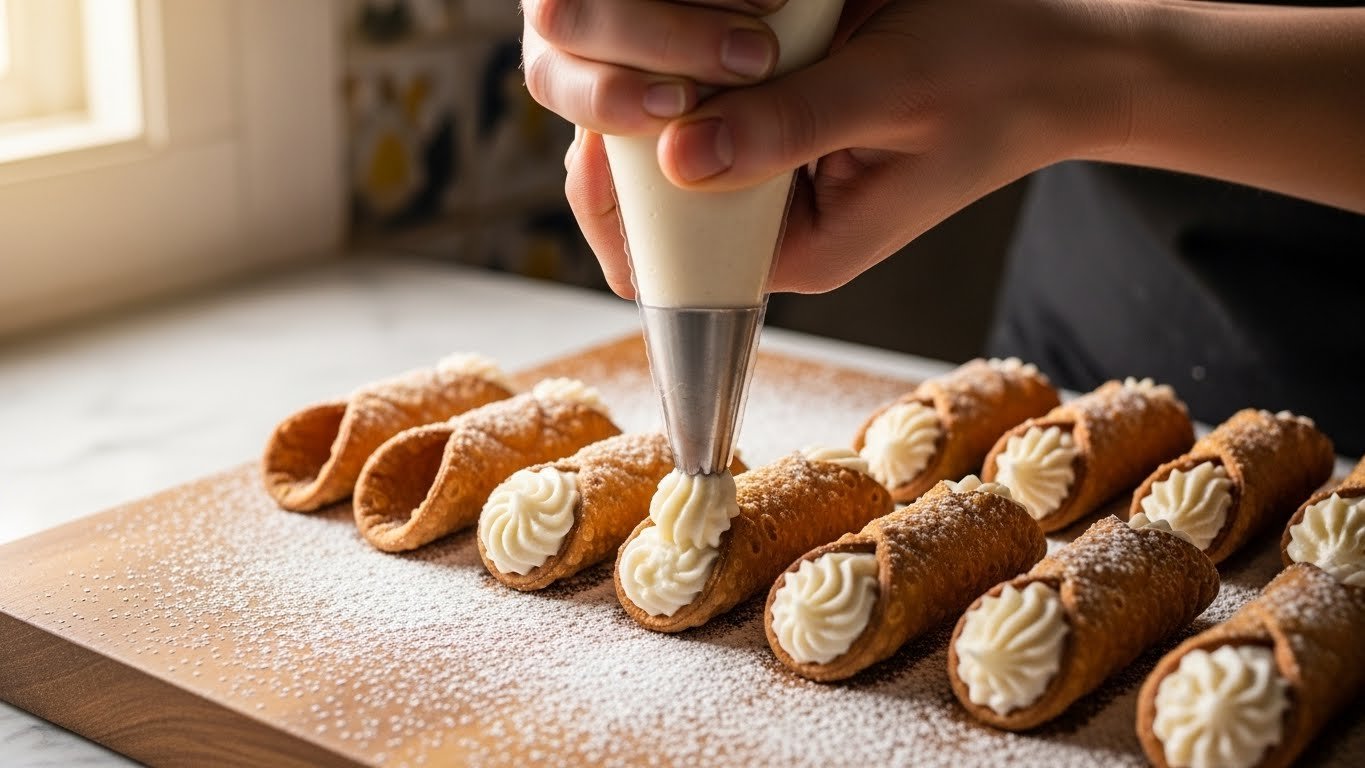
16. Pipe the ricotta filling into both ends of each shell just before serving.
17. Dip the ends in pistachios or chocolate chips for decoration.
18. Dust lightly with powdered sugar.
Recipe Notes
• Fill cannoli only when serving — filled shells soften quickly.
• If your shells absorb too much oil, your oil temperature may be too low.
• Marsala wine gives the most authentic flavor and perfect texture.
Tips & Variations
• Add lemon zest, cinnamon, or almond extract to the filling.
• Make chocolate-dipped cannoli shells for extra richness.
• Use half mascarpone cheese for an ultra-creamy filling.
• Add candied orange peel for traditional Sicilian flavor.
• For a festive twist, roll ends in colorful sprinkles.
• Try savory cannoli shells for appetizers (omit sugar and cinnamon).
Pro Chef Tips
• Drain ricotta overnight — this is key for a thick, stable filling.
• Roll dough paper-thin for shells that crisp properly.
• Rest the dough to make rolling easier.
• Don’t overcrowd the fryer — shells crisp better with space.
• Use a piping bag with a large tip for smooth filling.
• Dip your fingers in water to help seal the dough around the tube.
Common Mistakes to Avoid
• Filling cannoli too early, causing soggy shells
• Using watery ricotta, resulting in runny filling
• Rolling the dough too thick, leading to chewy shells
• Overfrying shells until too dark or bitter
• Sealing the dough too loosely, causing shells to open while frying
• Using low-quality vanilla or ricotta, which affects flavor
Storage & Meal Prep
• Store empty shells in an airtight container for up to 1 week.
• Store filling separately in the refrigerator for up to 3 days.
• Always fill cannoli right before serving.
• If shells lose crispness, reheat them in the oven for a few minutes.
Make-Ahead & Freezer Notes
• Shells freeze beautifully — store in an airtight container for up to 2 months.
• Thaw at room temperature before serving.
• Ricotta filling is best fresh and should not be frozen.
• You can prepare dough ahead and refrigerate it for 2 days.
Serving Suggestions
• Dust with powdered sugar for a classic finish.
• Serve with espresso or cappuccino for a true Italian experience.
• Dip ends in pistachios, almonds, or chocolate shavings.
• Add fresh fruit on the side, especially berries or citrus.
• Serve on a dessert platter with tiramisu or biscotti.
FAQs
Why did my shells come out soft?
The dough may have been too thick or the oil not hot enough.
Can I bake cannoli shells?
Yes, but fried shells are more authentic and much crispier.
Why is my filling runny?
Your ricotta wasn’t drained long enough. Try straining overnight.
Can I use mascarpone instead of ricotta?
You can use a mix, but ricotta gives the authentic Sicilian flavor.
Do I need Marsala wine?
It gives the best texture, but vinegar and water work as substitutes.
Conclusion
Authentic Sicilian cannoli are one of the most delightful desserts you can make at home. With crispy fried shells, creamy ricotta filling, and endless topping options, each cannolo is a delicious little work of art. While traditional, this recipe is simple enough for beginners and delivers bakery-quality results that taste fresh, rich, and unforgettable.