Introduction
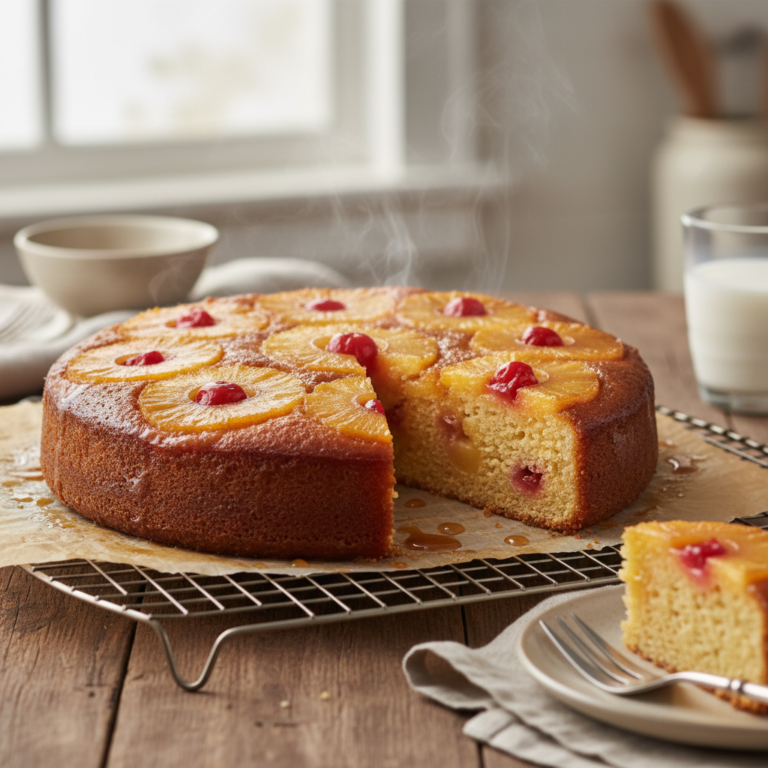
There is something so special about a pineapple upside down cake. The shiny pineapple rings, the bright red cherries, the thick buttery brown sugar glaze that soaks into a soft yellow cake underneath… it is pure comfort and pure nostalgia in one pan.
Maybe you remember your grandma or mom turning a warm cake out of a skillet and everyone quietly waiting to see if the pineapple pattern stayed perfect. Maybe you’ve only seen pineapple upside down cake in old cookbooks and always wanted to try it. Either way, this is one of those classic desserts that never really goes out of style.
This nostalgic pineapple upside down cake is:
- Perfectly moist
- Rich and buttery
- Sweet but not too sweet
- Full of caramelized pineapple flavor
And the best part? It is actually very simple to make. You do not need special baking skills or fancy equipment. If you can melt butter, stir a batter, and flip a cake onto a plate, you can make this beautiful old-fashioned dessert at home.
In this post, I’ll walk you through:
- A little background about pineapple upside down cake
- Which ingredients make it extra moist and tender
- Step-by-step instructions with clear, easy language
- Helpful tips, variations, and troubleshooting
By the end, you will feel ready to bake a perfectly moist and buttery pineapple upside down cake that looks impressive and tastes even better.
Let’s get baking!
History / Background
Pineapple upside down cake is one of those desserts that feels very “retro,” like something from the 1950s or 1960s, but its story actually starts a bit earlier.
Before pineapple upside down cake, people were already making “upside down cakes” in cast iron skillets on the stovetop or in wood ovens. They would put fruit (like apples, peaches, or cherries) in the bottom of the pan with sugar and butter, then pour batter on top. After baking, they would flip the cake and reveal a glistening fruit topping.
When canned pineapple became widely available in the early 1900s, everything changed. Suddenly, home bakers could get perfectly sliced pineapple rings any time of year.
In the 1920s, the Dole pineapple company held a recipe contest to promote canned pineapple. Many of the entries were for pineapple upside down cake. The dessert quickly became very popular in American homes:
- It was easy and affordable.
- The pineapple rings and maraschino cherries looked festive.
- It felt special enough for holidays and parties.
By the 1950s and 1960s, pineapple upside down cake was on almost every dessert table. It was often made in cast iron skillets or round pans, sometimes even in individual molds.
Today, it’s thought of as a “nostalgic” recipe, bringing back memories of family dinners and warm kitchens. But honestly, it still tastes amazing. The combination of caramelized brown sugar, tangy-sweet pineapple, and buttery cake is timeless.
This recipe keeps that old-fashioned, nostalgic feel, but uses a moist, tender cake base and a rich buttery topping so you get the best texture and flavor every time.
Why You’ll Love This Recipe
• Deeply moist and buttery – The cake is soft and tender, not dry or crumbly, thanks to butter, oil, and pineapple juice.
• True nostalgic flavor – Classic canned pineapple rings and cherries, with a rich brown sugar topping that tastes like the cakes from childhood.
• No special skills needed – Simple steps, clear instructions, and easy ingredients make this perfect for beginner bakers.
• Picture-perfect topping – The pineapple and cherry design looks impressive when you flip the cake out of the pan.
• Balanced sweetness – Sweet pineapple and brown sugar, but not so sweet that you can’t enjoy a big slice.
• Made in one pan – The topping and cake are baked together, so there’s less cleanup.
• Great warm or at room temperature – Serve straight from the oven or after it cools – it’s delicious both ways.
• Works for many occasions – Birthdays, holidays, Sunday dinners, potlucks, or just a cozy dessert night.
• Easy to customize – Add rum, use fresh pineapple, make mini cakes, or add extra cherries.
• Keeps well – Stays moist for a couple of days, and reheats beautifully.
Ingredient Notes
Here’s a closer look at what you’ll need to make this perfectly moist and buttery pineapple upside down cake, and why each ingredient matters.
For the Pineapple Topping
Butter
We melt butter in the bottom of the pan to create a rich, buttery base for the brown sugar and pineapple. Use unsalted butter so you can control the salt in the recipe.
Brown Sugar
Light brown sugar gives that classic caramel-like flavor and sticky texture on top of the cake. As it bakes with the butter and pineapple juice, it turns into a thick, glossy sauce.
Canned Pineapple Rings
For that nostalgic look, canned pineapple rings are perfect:
- They are consistent in size.
- They are soft enough to bake quickly.
- The juice can be used in the cake batter for extra pineapple flavor.
Choose pineapple packed in juice, not heavy syrup, if possible.
Maraschino Cherries
These bright red cherries are classic in pineapple upside down cake. They sit in the center of each pineapple ring and add a pop of color and sweetness.
Optional: Pecans or Walnuts
You can sprinkle chopped nuts between the pineapple slices for extra texture and flavor if you like.
For the Cake Batter
All-Purpose Flour
Regular all-purpose flour gives structure to the cake while keeping it tender. Measure it by spooning into your cup and leveling off, or use a kitchen scale.
Baking Powder and Baking Soda
These help the cake rise and stay light. Using both gives a nice lift and a tender crumb.
Salt
A small amount of salt balances the sweetness and brings out the butter and pineapple flavors.
Unsalted Butter
Softened butter adds rich flavor and a soft texture to the cake.
Oil
A little neutral oil (like canola or vegetable oil) keeps the cake extra moist for longer, even after it cools.
Granulated Sugar
Sugar sweetens the cake and helps create a soft, fine crumb.
Eggs
Eggs bind the batter and help the cake rise. They also add richness.
Vanilla Extract
Vanilla deepens the flavor and adds warmth. Pure vanilla extract gives the best aroma, but use whatever you have.
Pineapple Juice
Use some of the juice from the canned pineapple to add moisture and extra pineapple flavor to the cake. This helps connect the topping and the cake flavor-wise.
Milk or Buttermilk
Milk or buttermilk adds moisture. Buttermilk (or milk with a teaspoon of vinegar or lemon juice) makes the cake extra tender.
Equipment Needed
You do not need any fancy tools for this nostalgic pineapple upside down cake. Here’s what helps:
Essential Equipment
- 9-inch round cake pan (at least 2 inches deep) or a 9-inch cast iron skillet
- Mixing bowls – one large for the batter, one small for dry ingredients
- Measuring cups and spoons
- Whisk and spatula – whisk for mixing dry and wet ingredients, spatula for folding and scraping
- Electric hand mixer or stand mixer – helpful for creaming butter and sugar, though you can do it by hand with effort
- Small saucepan or microwave-safe bowl – to melt the butter for the topping
- Knife and cutting board – if you want to cut pineapple pieces or halves
- Cooling rack – to cool the cake after baking
- Large plate or serving platter – to invert the cake onto
Nice-to-Have Equipment
- Kitchen scale – for more accurate measuring of flour and sugar
- Offset spatula – for smoothing the batter
- Parchment circle – optional, but can help prevent sticking if your pan is older (just make sure it’s under the sugar/butter layer, not on top of it)
Full Recipe Card (Ingredients, Instructions, Notes)
Nostalgic Pineapple Upside Down Cake (Perfectly Moist and Buttery)
Servings: 8–10
Prep Time: 25 minutes
Bake Time: 35–45 minutes
Total Time: About 1 hour 15 minutes (including cooling)
Difficulty: Easy to Intermediate
Ingredients
For the Pineapple Topping
- ¼ cup (60 g) unsalted butter
- ¾ cup (150 g) light brown sugar, packed
- 7–9 canned pineapple rings (about 1 regular 20 oz / 567 g can, drained and juice reserved)
- 8–12 maraschino cherries, drained and patted dry
- Optional: ¼ cup chopped pecans or walnuts
For the Cake Batter
- 1½ cups (190 g) all-purpose flour
- 1½ teaspoons baking powder
- ¼ teaspoon baking soda
- ½ teaspoon fine salt
- ½ cup (113 g / 1 stick) unsalted butter, softened to room temperature
- ¼ cup (60 ml) neutral oil (canola, vegetable, or sunflower)
- 1 cup (200 g) granulated sugar
- 2 large eggs, at room temperature
- 1 teaspoon vanilla extract
- ½ cup (120 ml) pineapple juice (from the can)
- ¼ cup (60 ml) milk or buttermilk, at room temperature
Instructions
1. Prepare the pan and topping
- Preheat your oven to 350°F (175°C).
- In a small saucepan or microwave-safe bowl, melt the ¼ cup (60 g) butter for the topping.
- Pour the melted butter into the bottom of your 9-inch round cake pan or cast iron skillet. Tilt the pan to coat the bottom evenly.
- Sprinkle the brown sugar evenly over the melted butter.
- Arrange the pineapple rings on top of the brown sugar layer:
- Place one ring in the center.
- Arrange the remaining rings around the center one in a circle.
- If needed, cut some rings in half to fill gaps along the edge.
- Place a maraschino cherry in the center of each pineapple ring. If you like, tuck extra cherries into any spaces between the rings.
- If using nuts, sprinkle them evenly in the spaces between the pineapple slices.
Set the pan aside while you make the cake batter.
2. Mix the dry ingredients
- In a medium bowl, whisk together the flour, baking powder, baking soda, and salt. Set aside.
3. Cream butter, oil, and sugar
- In a large mixing bowl, add the softened butter and granulated sugar.
- Beat with an electric mixer on medium speed for about 2–3 minutes, until the mixture is light and fluffy.
- Add the oil and beat again until well combined and creamy.
4. Add eggs and vanilla
- Add the eggs one at a time, beating well after each addition until fully incorporated.
- Mix in the vanilla extract.
5. Add pineapple juice and milk
- In a measuring cup, combine the pineapple juice and milk (or buttermilk).
6. Combine wet and dry ingredients
- Add about one-third of the dry ingredients to the butter mixture and mix on low speed just until combined.
- Add half of the pineapple juice/milk mixture and mix gently.
- Repeat with another one-third of the dry ingredients, then the rest of the juice/milk, and finally the last third of the dry ingredients.
- Mix on low speed or fold gently with a spatula until the batter is just combined and smooth. Do not overmix.
7. Assemble and bake
- Carefully spoon the batter over the pineapple layer in the pan. Try not to move the pineapple rings around.
- Gently spread the batter evenly to the edges with a spatula.
- Place the pan in the preheated oven and bake for 35–45 minutes, or until:
- The top is golden brown and springs back lightly when touched.
- A toothpick inserted into the center (not into the pineapple) comes out clean or with a few moist crumbs, but no wet batter.
8. Cool and invert
- Remove the cake from the oven and place it on a cooling rack.
- Let the cake cool in the pan for about 10–15 minutes. This helps it set but keeps the topping soft enough to release.
- Run a knife gently around the edge of the pan to loosen the cake if needed.
- Place a large plate or serving platter upside down over the pan.
- Carefully but confidently flip the pan and plate together, then gently lift off the pan.
- If any pineapple pieces or cherries stick to the pan, simply lift them off and place them back on the cake.
- Let the cake cool for another 15–20 minutes before slicing, or serve slightly warm.
Enjoy your nostalgic pineapple upside down cake!
Recipe Notes
- If your pan is not very deep, place it on a baking sheet to catch any potential drips.
- If the top of the cake is browning too quickly, you can tent it loosely with foil for the last 10 minutes of baking.
- Use pineapple packed in juice, not syrup, for the best balance of sweetness.
- You can substitute buttermilk for milk to make the cake even more tender. If you do not have buttermilk, mix ¼ cup milk with ¾ teaspoon vinegar or lemon juice and let it sit for 5 minutes before using.
Tips & Variations
Once you master the classic recipe, you can play with some fun variations.
Flavor Variations
- Rum Pineapple Upside Down Cake
Add 1–2 tablespoons of dark or spiced rum to the topping mixture (with the butter and brown sugar), and/or replace a couple of tablespoons of pineapple juice in the batter with rum. - Coconut Pineapple Upside Down Cake
Add ¼–½ cup shredded coconut over the pineapple rings before adding the batter. You can also replace some of the milk with coconut milk. - Spiced Pineapple Cake
Add ½ teaspoon cinnamon and a pinch of nutmeg to the batter for a lightly spiced version.
Fruit Variations
- Pineapple and Cherry Mix
Instead of only putting cherries in the centers, add extra cherries in the gaps between pineapple rings. - Pineapple and Mango
Add small pieces of mango between the pineapple slices for a more tropical taste. - Using Fresh Pineapple
You can use fresh pineapple slices instead of canned. Just make sure they are cut in even rings and not too thick. You may need to add a tablespoon or two of extra sugar to the topping since fresh pineapple can be more tart.
Size and Shape Variations
- Cast Iron Skillet Version
Make the topping directly in a cast iron skillet: melt butter and sugar in the skillet, arrange pineapple and cherries, then add batter and bake. - Mini Pineapple Upside Down Cakes
Use a muffin tin: put a small amount of melted butter and brown sugar in each cup, add a pineapple ring or chunk and a cherry, then cover with batter. Bake for 18–22 minutes. - Rectangle or Square Pan
Use an 8×8 or 9×9 inch square pan. Arrange pineapple slices however they fit best.
Pro Chef Tips
Here are some helpful tips from a “pro” perspective that still use easy home kitchen methods:
- Dry the Pineapple and Cherries
Pat pineapple rings and cherries dry with paper towels before arranging them. This helps prevent extra liquid from making the topping too runny. - Don’t Skimp on the Brown Sugar
The brown sugar is what creates the rich caramel-like topping. The amount in the recipe is important for that shiny finish and sticky texture. - Use Room Temperature Ingredients
Let your butter, eggs, and milk come to room temperature before mixing. This helps the batter come together smoothly and bake evenly. - Mix Gently After Adding Dry Ingredients
Overmixing can make the cake tough. Once the flour is added, mix just until you don’t see white streaks. - Test Doneness in the Cake, Not the Pineapple
When using a toothpick, make sure to insert it into the cake portion, not a pineapple ring or cherry, so you get an accurate result. - Wait Before Flipping
Letting the cake sit for 10–15 minutes before inverting helps the topping thicken slightly and reduces the chance of it all running off. - Flip with Confidence
Hold the plate tightly against the pan and flip in one swift motion. A quick flip is less risky than a slow, hesitant one. - Serve Slightly Warm
For the best texture and flavor, serve the cake while it’s still a little warm. The topping will be soft and glossy, and the cake extra tender.
Common Mistakes to Avoid
Even though pineapple upside down cake is simple, a few things can go wrong. Here is how to avoid the most common issues:
1. Topping Sticks to the Pan
Problem: Some pineapple or cherries stay stuck to the pan when you flip.
How to avoid it:
- Make sure you used enough butter and brown sugar to fully coat the bottom.
- Do not let the cake cool completely in the pan; flip after about 10–15 minutes.
- If it still sticks, don’t panic—just lift the pieces off the pan and place them back onto the cake.
2. Cake is Dry
Problem: The cake feels dry or crumbly.
Possible causes:
- Overbaking (left in the oven too long)
- Too much flour or not enough liquid
- Oven runs hotter than expected
How to avoid it:
- Start checking for doneness at the earlier baking time.
- Measure flour carefully (spoon and level or use a scale).
- Use pineapple juice and milk as listed; don’t reduce them.
3. Cake is Soggy or Dense
Problem: The cake feels heavy or too wet.
Possible causes:
- Too much liquid
- Underbaked cake
- Batter overmixed
How to avoid it:
- Use the exact amount of pineapple juice and milk in the recipe.
- Bake until a toothpick in the center comes out clean.
- Mix gently once the flour is added.
4. Topping Too Runny
Problem: The brown sugar and pineapple topping is very liquid and doesn’t set nicely.
Possible causes:
- Too much juice in the pan
- Not enough brown sugar
- Cutting into the cake while too hot
How to avoid it:
- Drain pineapple well and pat dry.
- Use the full amount of brown sugar.
- Let the cake rest and cool before slicing.
5. Uneven Baking
Problem: One side of the cake is more done than the other.
How to avoid it:
- Bake in the center of the oven.
- If your oven has hot spots, rotate the pan halfway through baking.
Storage & Meal Prep
Pineapple upside down cake actually keeps quite well, and some people say it tastes even better the next day.
Room Temperature
- If your kitchen is cool, you can store the cake at room temperature, tightly covered, for up to 1 day.
- Make sure it is covered with plastic wrap or in a container so it doesn’t dry out.
Refrigerator
- For longer storage, cover the cake well and refrigerate for 3–4 days.
- The topping may firm up a bit in the fridge, but the cake will stay moist.
Reheating
- To serve warm slices, microwave individual pieces for 15–20 seconds.
- Or warm the entire cake gently in a 300°F (150°C) oven for about 10–15 minutes.
Make-Ahead & Freezer Notes
Make-Ahead Tips
- You can bake the cake a day before serving. Let it cool, cover it well, and keep it at room temperature or in the fridge.
- If you like to serve it warm, reheat gently in the oven before serving.
Freezing the Cake
Pineapple upside down cake can be frozen, though the texture of the topping may change slightly.
To freeze:
- Let the cake cool completely.
- Wrap the whole cake tightly in plastic wrap, then in foil. Or freeze individual slices wrapped well.
- Freeze for up to 2 months.
To thaw and serve:
- Thaw overnight in the refrigerator, still wrapped.
- Bring to room temperature, then warm gently in a low oven if you want it warm.
Freezing is a nice option if you make a larger cake or have leftovers after a party.
Serving Suggestions
This nostalgic pineapple upside down cake is wonderful all by itself, but here are a few ideas to make it even more special.
Classic Ways to Serve
- Slightly warm, with a cup of coffee or tea
- With a scoop of vanilla ice cream, which melts into the caramelized topping
- With a dollop of lightly sweetened whipped cream
Extra Touches
- Drizzle a little caramel sauce over the top for extra indulgence.
- Sprinkle toasted coconut or chopped nuts on each slice.
- Add fresh pineapple chunks or berries on the side for color.
Occasion Ideas
- Birthday Cake: Add a few candles right on top of the pineapple rings.
- Holiday Dessert: Serve at Easter, Christmas, or Thanksgiving as a lighter alternative to heavy pies.
- Summer Party: Perfect for barbecues and outdoor gatherings, especially with ice cream.
FAQs
Q: Can I use fresh pineapple instead of canned?
A: Yes, you can use fresh pineapple rings. Slice them evenly and not too thick. Fresh pineapple is often more tart, so you may want to add an extra tablespoon or two of brown sugar to the topping.
Q: Do I have to use maraschino cherries?
A: No, they are optional, but they add a classic nostalgic look and a sweet pop of color. You can skip them or use another type of candied cherry or even small pieces of fresh cherry.
Q: My cake stuck to the pan when I flipped it. What did I do wrong?
A: It happens sometimes! Make sure you coat the bottom of the pan with enough butter and brown sugar. Also, flip the cake after it has rested 10–15 minutes, not too early and not too late. If some topping sticks, just carefully lift it off and place it back on the cake.
Q: Why is my cake dry?
A: The most common reason is overbaking. All ovens are different, so start checking a bit early. Also, measure the flour correctly and use the full amount of pineapple juice and milk.
Q: Can I make this in a different size pan?
A: Yes. You can use an 8-inch round (the cake will be taller and may need a few more minutes of baking) or a square 8×8 or 9×9 inch pan. Just adjust the pineapple arrangement to fit.
Q: Can I double the recipe?
A: You can double the recipe and bake it in a 9×13 inch pan. Arrange the pineapple and cherries to cover the bottom, double all the ingredients, and bake a bit longer, checking for doneness.
Q: Can I make this gluten-free?
A: You can try using a 1:1 gluten-free all-purpose baking flour. The texture may be slightly different, but it should still work.
Q: Do I need to refrigerate leftovers?
A: For one day, you can leave the cake covered at room temperature. For longer storage, it’s best to refrigerate it.
Conclusion (friendly and encouraging)
You’ve just learned how to make a truly nostalgic pineapple upside down cake that is perfectly moist, buttery, and full of old-fashioned charm.
Even though it looks impressive when you flip it out of the pan and reveal the pineapple and cherries, this is actually a very simple, manageable recipe. The ingredients are basic, the steps are clear, and most of the magic happens in the oven while your kitchen fills with the smell of caramelized sugar and baking cake.
If this is your first time making pineapple upside down cake, be kind to yourself. Maybe a pineapple ring slides a little, or a cherry sticks to the pan. That’s okay. You can always nudge things back into place, and once you take that first bite, no one will care if it’s not perfectly arranged.
With every time you bake it, you’ll get more comfortable with the process: how long to bake in your oven, when to flip, how much caramel you like. Soon, it will feel like an easy, go-to dessert you can make for family dinners, holidays, or just because you’re craving something warm and cozy.
So the next time you see a can of pineapple rings on the shelf, think of this recipe. Pull out your pan, melt some butter, and create a little piece of dessert history in your own kitchen.