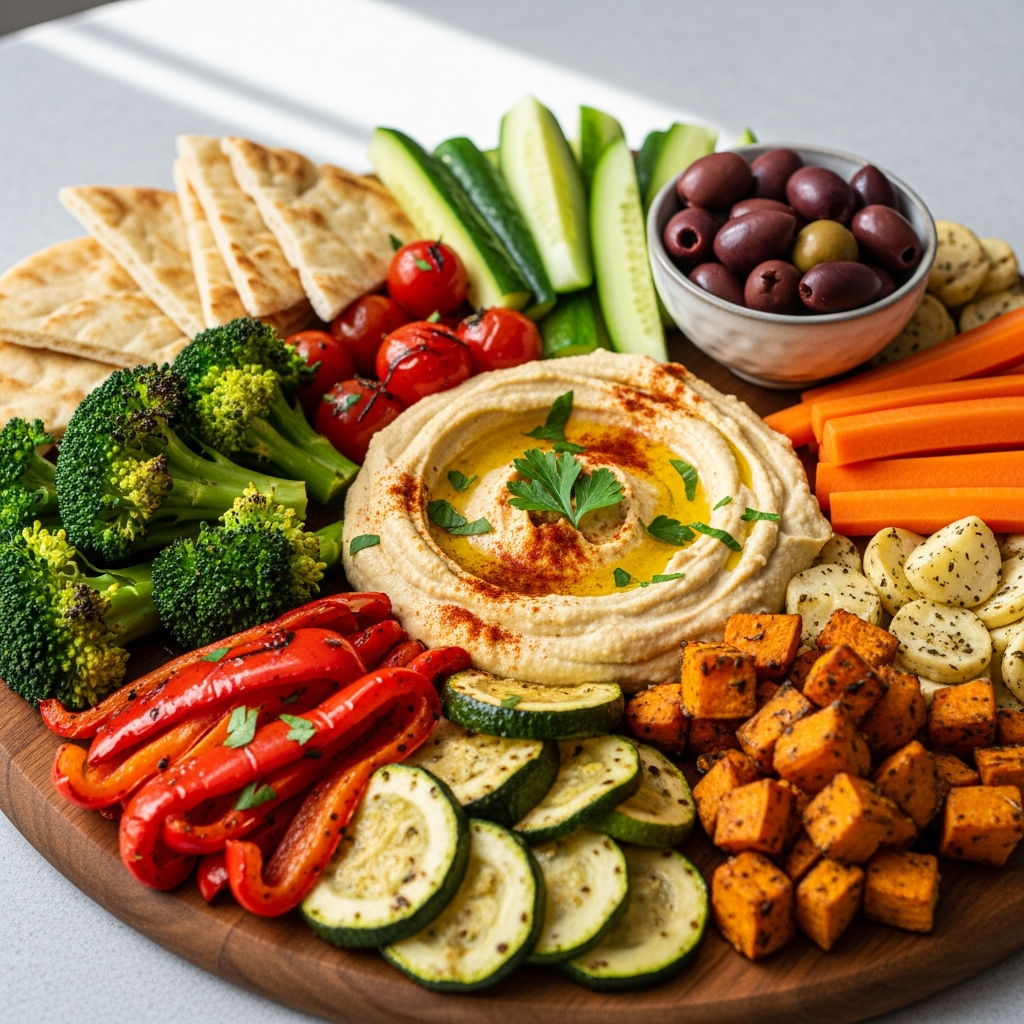
Hello, food lovers! Are you looking for a dish that’s easy to make, looks absolutely stunning, and tastes incredibly fresh and satisfying? Then you’ve come to the right place! We’re diving into the wonderful world of roasted vegetable hummus platters – a perfect choice for entertaining friends and family, or simply enjoying a delightful snack or light meal yourself. This platter is a feast for the eyes and the palate, packed with vibrant colors and fantastic flavors. It’s simple to prepare but always leaves a lasting impression.
History / Background
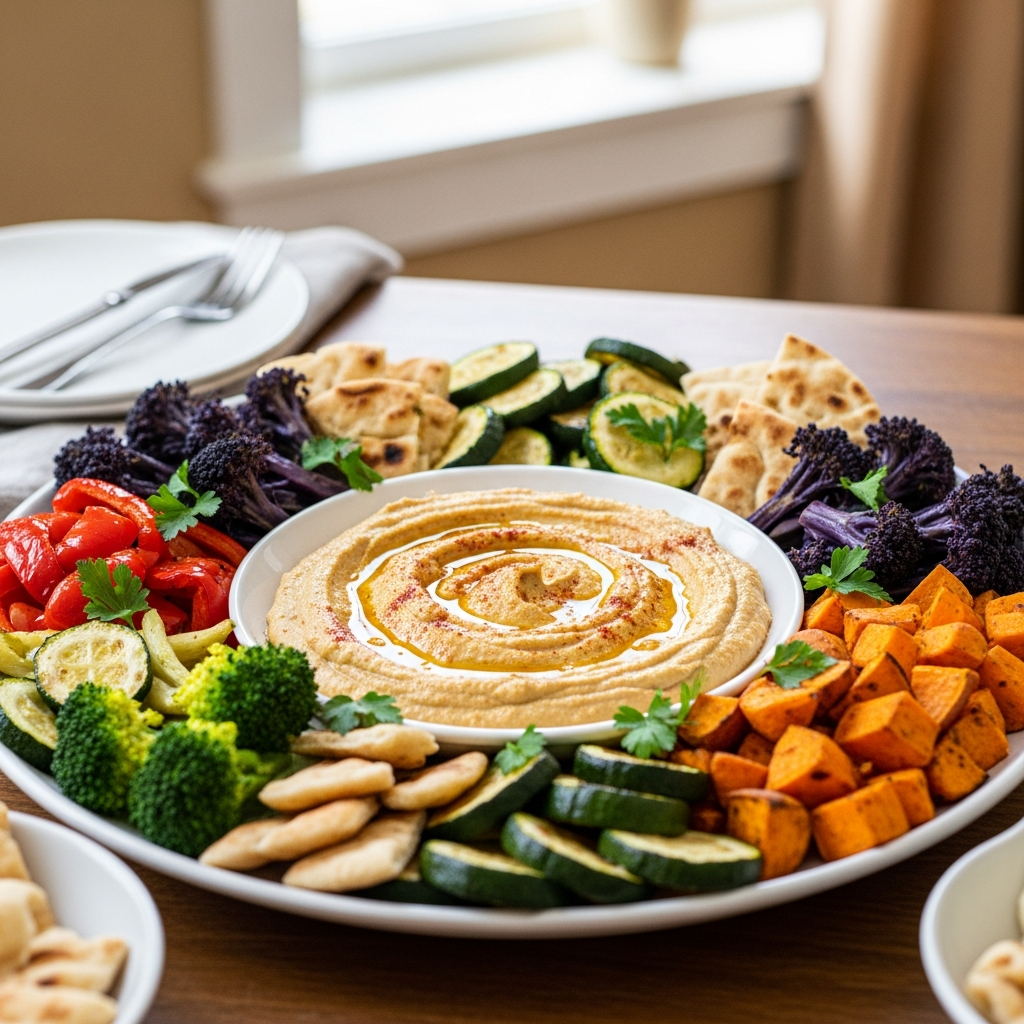
Hummus has a rich and ancient history, originating in the Middle East centuries ago. This creamy, savory dip made from chickpeas, tahini, lemon juice, and garlic has been a staple in many cuisines, cherished for its nutritional value and delicious taste. It’s a foundational part of many Mediterranean and Middle Eastern diets, often served as part of a meze spread.
Roasted vegetables, on the other hand, have been a cooking technique used by humans for thousands of years. Roasting brings out the natural sweetness and deepens the flavors of vegetables, transforming them into something truly special. Combining these two ancient, beloved components – the creamy, earthy hummus and the sweet, tender roasted vegetables – creates a modern classic. It’s a fusion that celebrates wholesome ingredients in a fresh and exciting way, perfect for today’s gatherings.
Why You’ll Love This Recipe
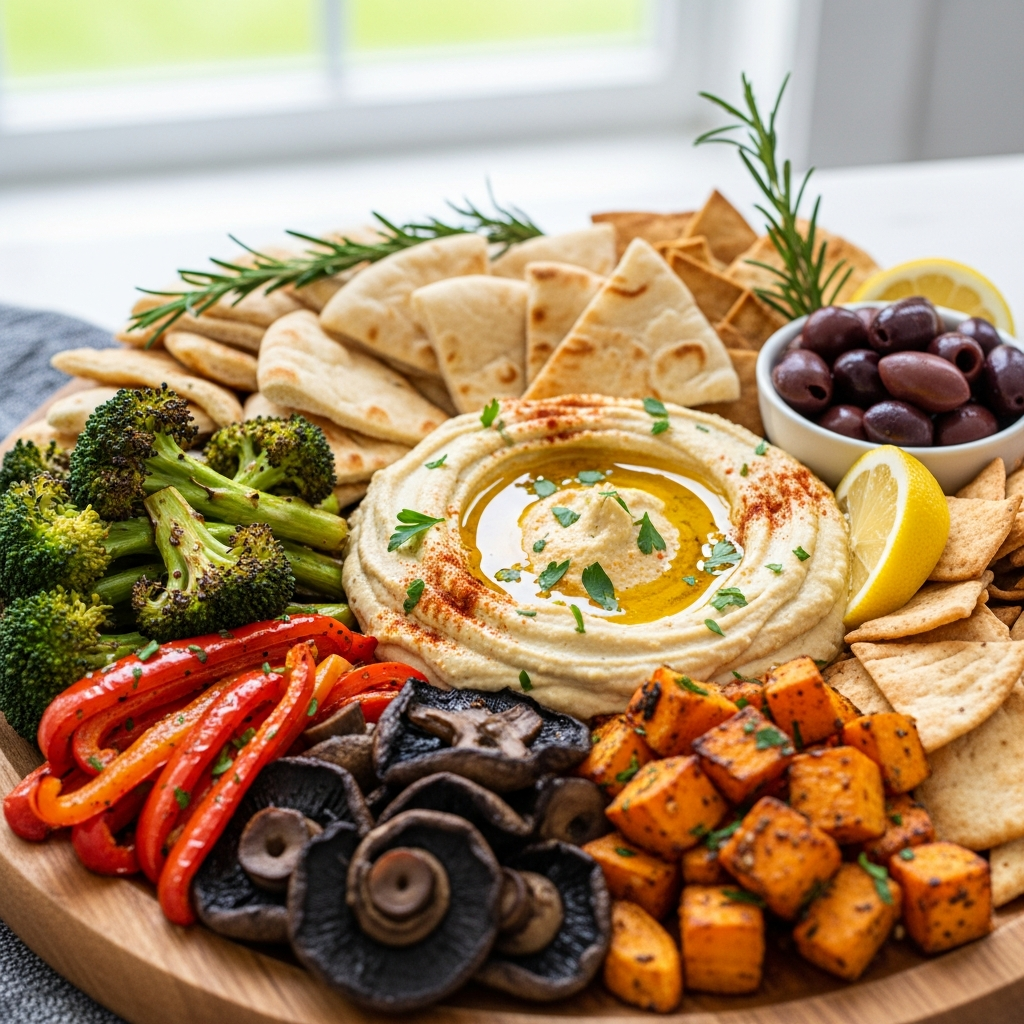
This roasted vegetable hummus platter isn’t just a dish; it’s an experience. Here’s why you’ll absolutely adore adding it to your cooking repertoire:
* Easy to make: With simple steps, anyone can create this impressive platter.
* Visually appealing: The bright colors of the vegetables and the creamy hummus make it a showstopper.
* Healthy and nutritious: Packed with fiber, vitamins, and healthy fats.
* Customizable: Easily swap out vegetables or hummus flavors to suit your taste.
* Crowd-pleaser: It’s universally loved by adults and children alike.
* Great for meal prep: Many components can be prepared ahead of time.
* Suitable for various diets: Naturally vegetarian, vegan, and gluten-free friendly when served with appropriate dippers.
* Versatile: Perfect for appetizers, light lunches, or a healthy snack spread.
Ingredient Notes
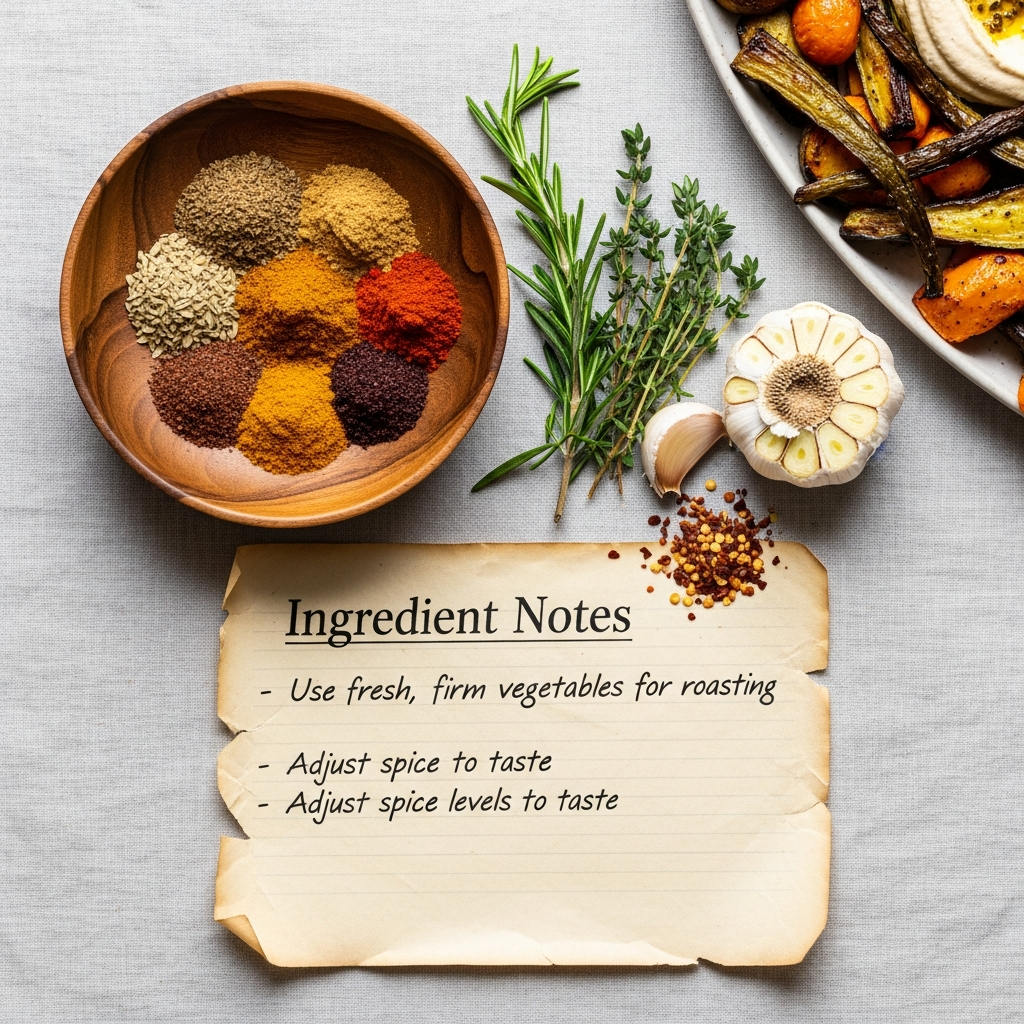
Creating the perfect platter starts with understanding your ingredients. Here’s a little guide to help you choose the best:
For the Hummus Base
* Store-bought hummus: Choose a good quality, plain hummus. There are many excellent brands available that offer a smooth texture and balanced flavor.
* Homemade hummus: If you prefer to make your own, you’ll need canned chickpeas, tahini, lemon juice, garlic, and a touch of water or aquafaba for creaminess. Making it from scratch allows for ultimate customization.
For the Roasted Vegetables
* Bell peppers: Red, yellow, and orange peppers add sweetness and vibrant color. Green peppers work too, but are slightly more bitter.
* Zucchini and Yellow Squash: These absorb flavors beautifully and become wonderfully tender when roasted.
* Eggplant: A classic roasting vegetable that becomes creamy and rich.
* Cherry Tomatoes: They burst with sweet juice when roasted, adding a lovely tang.
* Red Onion: It mellows out and caramelizes, adding a subtle sweetness.
* Asparagus: Earthy and tender-crisp.
* Broccoli florets: Roasting makes them sweet and slightly nutty.
* Carrots: They become wonderfully sweet and tender.
* Olive oil: Use a good quality extra virgin olive oil for roasting and drizzling. It adds flavor and helps with browning.
* Seasonings: Salt, black pepper, garlic powder, dried oregano, and paprika are a great starting point. Fresh rosemary or thyme sprigs can also be roasted with the vegetables for extra aroma.
For the Garnishes and Dippers
* Fresh herbs: Fresh parsley or cilantro, finely chopped, adds brightness.
* Toasted pine nuts: These provide a lovely crunch and nutty flavor.
* Olives: Kalamata or green olives add a briny, salty touch.
* Crumbled feta cheese: Optional, but delicious for those who enjoy dairy.
* Good quality extra virgin olive oil: For a final flourish and rich flavor drizzle.
* Dippers: Warm pita bread, naan, various crackers, cucumber sticks, carrot sticks, celery sticks, or even toasted baguette slices.
Equipment Needed

Good tools make cooking a pleasure. Here’s what you’ll need for this recipe:
* Baking sheets: At least two, to avoid overcrowding your vegetables.
* Large mixing bowl: For tossing your vegetables with oil and seasonings.
* Sharp knife: Essential for safely and efficiently chopping vegetables.
* Cutting board: A sturdy surface for all your prep work.
* Serving platter: A large, attractive platter or shallow bowl to display your hummus and vegetables.
Full Recipe Card
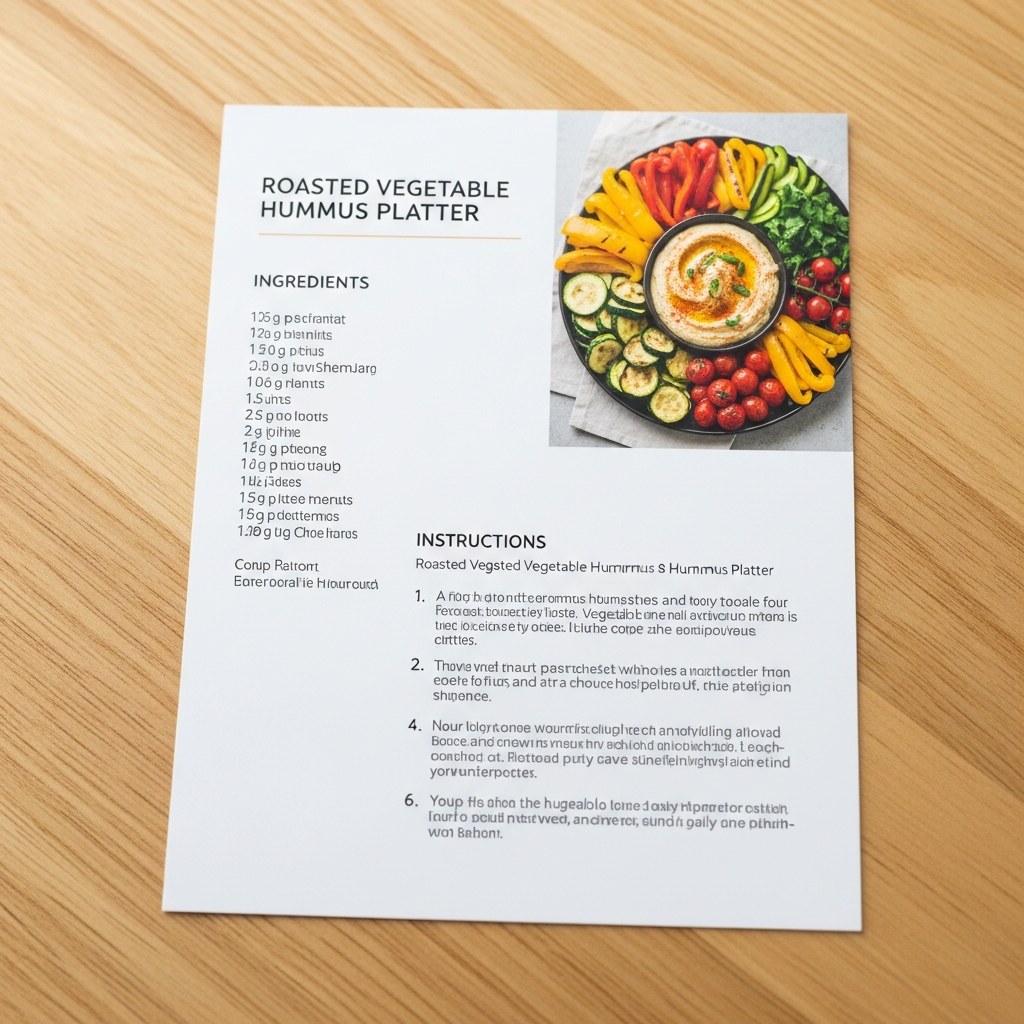
Let’s get cooking! This recipe will guide you through creating a truly spectacular roasted vegetable hummus platter.
Ingredients
For the Roasted Vegetables:
* 1 red bell pepper, cored and sliced into strips
* 1 yellow bell pepper, cored and sliced into strips
* 1 zucchini, sliced into half-moons
* 1 yellow squash, sliced into half-moons
* 1/2 medium eggplant, cut into 1-inch cubes
* 1 cup cherry tomatoes
* 1/2 red onion, sliced into wedges
* 1 cup broccoli florets
* 3 tablespoons extra virgin olive oil
* 1 teaspoon salt
* 1/2 teaspoon black pepper
* 1 teaspoon garlic powder
* 1/2 teaspoon dried oregano
* 1/2 teaspoon paprika
For the Hummus Platter Base:
* 2 (10-ounce) containers store-bought plain hummus (or about 2.5 cups homemade hummus)
* 1 tablespoon extra virgin olive oil, for drizzling
For Serving and Garnish:
* 2 tablespoons fresh parsley, chopped
* 2 tablespoons toasted pine nuts
* 1/4 cup Kalamata olives, pitted and halved
* Warm pita bread, naan, vegetable sticks (cucumber, carrots), or crackers, for serving
Instructions
1. Preheat your oven: Set your oven to 400°F (200°C). Line two large baking sheets with parchment paper for easy cleanup.
2. Prepare the vegetables: In a large mixing bowl, combine all the chopped vegetables (bell peppers, zucchini, yellow squash, eggplant, cherry tomatoes, red onion, broccoli).
3. Season the vegetables: Drizzle the vegetables with 3 tablespoons of olive oil. Sprinkle with salt, black pepper, garlic powder, dried oregano, and paprika. Toss everything together until the vegetables are evenly coated.
4. Roast the vegetables: Divide the seasoned vegetables evenly between the two prepared baking sheets. Spread them out in a single layer, ensuring they are not overcrowded. This helps them roast and caramelize rather than steam.
5. Cook time: Roast for 25-35 minutes, or until the vegetables are tender and slightly caramelized at the edges. Halfway through the cooking time, give the vegetables a gentle toss to ensure even roasting.
6. Cool: Once roasted, remove the vegetables from the oven and let them cool for about 10-15 minutes. This prevents them from warming the hummus too much.
7. Assemble the platter: Spread the hummus evenly across a large serving platter or shallow bowl, creating a nice base.
8. Arrange vegetables: Artfully arrange the cooled roasted vegetables over the hummus. You can create sections for different vegetables or mix them up for a colorful display.
9. Garnish and serve: Drizzle the entire platter with 1 tablespoon of good quality extra virgin olive oil. Sprinkle with chopped fresh parsley, toasted pine nuts, and the halved Kalamata olives. Serve immediately with your favorite dippers.
Notes
* Adjust seasonings to your preference. A pinch of chili flakes can add a nice kick.
* Do not overcrowd the baking sheets; this is key for perfectly roasted, not steamed, vegetables.
* Roasting times may vary slightly depending on your oven and the size of your vegetable pieces.
Tips & Variations
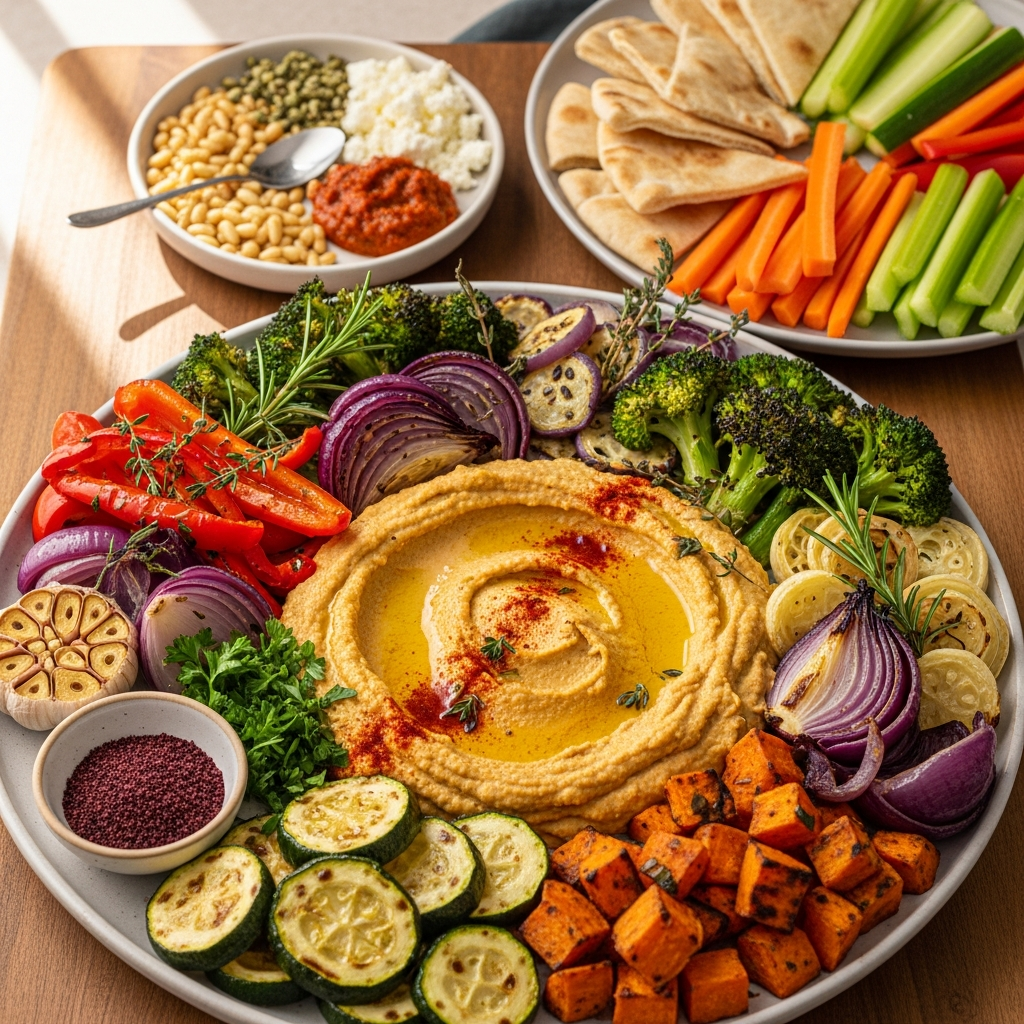
This recipe is wonderfully adaptable! Here are some ideas to make it your own:
* Hummus variations: Try using roasted red pepper hummus, garlic hummus, or even a spinach and artichoke hummus for different flavor profiles.
* Spice it up: Add a pinch of red pepper flakes, smoked paprika, or a sprinkle of sumac to your roasted vegetables for an extra layer of flavor.
* Herb power: Experiment with different fresh herbs like fresh dill, mint, or basil as a garnish.
* Add some protein: For a heartier platter, scatter some roasted chickpeas, crumbled goat cheese, or grilled halloumi cheese over the top.
* Seasonal swap: Use whatever vegetables are in season! Asparagus and snap peas in spring, corn and heirloom tomatoes in summer, or root vegetables like sweet potatoes and parsnips in fall and winter.
* Make it a bowl: Serve individual portions in bowls with a dollop of hummus and roasted veggies for a healthy lunch.
Pro Chef Tips
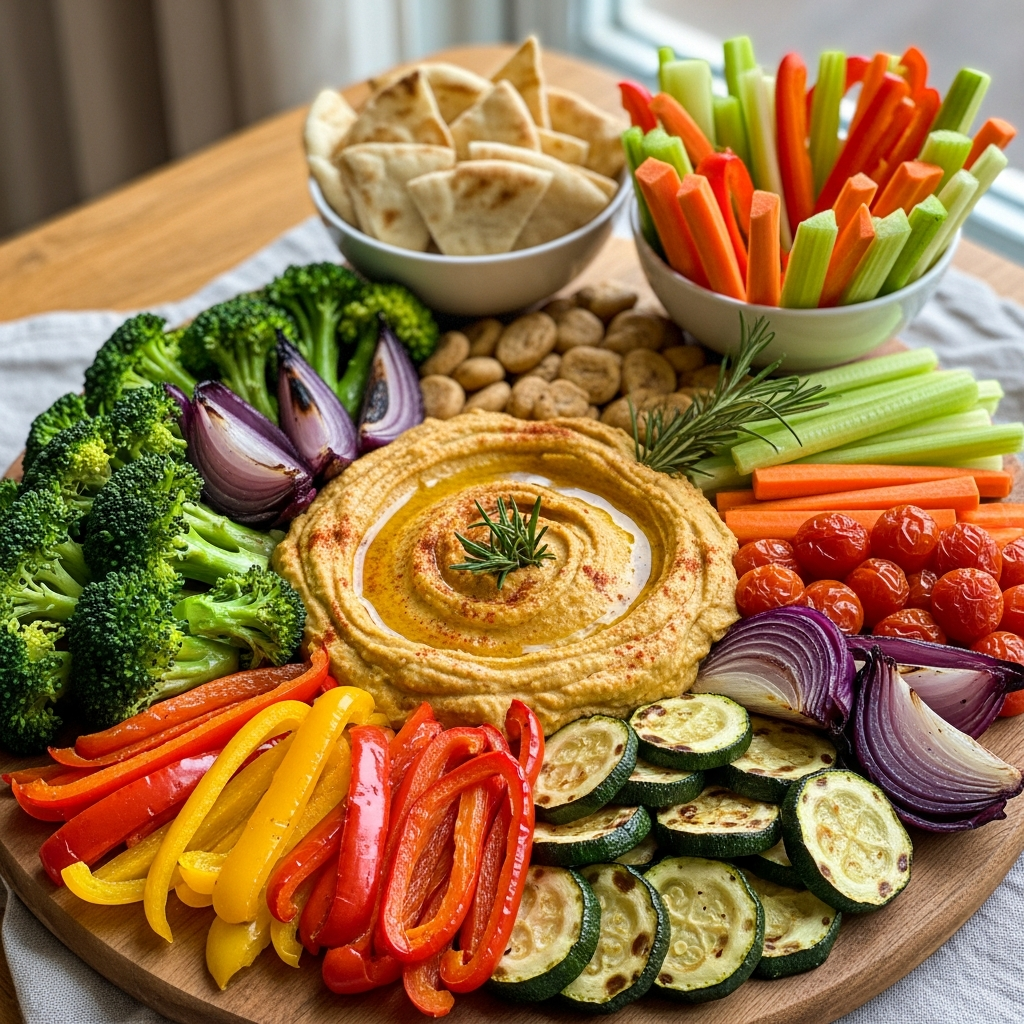
Elevate your platter with these insider tricks:
* Uniform cutting: Cut all your vegetables into roughly the same size. This ensures they cook evenly at the same rate.
* Don’t overcrowd the pan: This is crucial! Vegetables need space to release moisture and caramelize. If they are too close, they will steam instead of roast, resulting in soggy vegetables. Use two baking sheets if needed.
* Season generously: Vegetables can handle a good amount of seasoning. Don’t be shy with the salt, pepper, and herbs.
* Quality olive oil: A high-quality extra virgin olive oil used for both roasting and drizzling makes a noticeable difference in flavor.
* Cool your veggies: Let the roasted vegetables cool down a bit before placing them on the hummus. This prevents the hummus from getting warm and runny.
* Layering for presentation: Think about how you arrange the vegetables on the platter. Create different sections, colors, and textures for a professional, inviting look.
Common Mistakes to Avoid
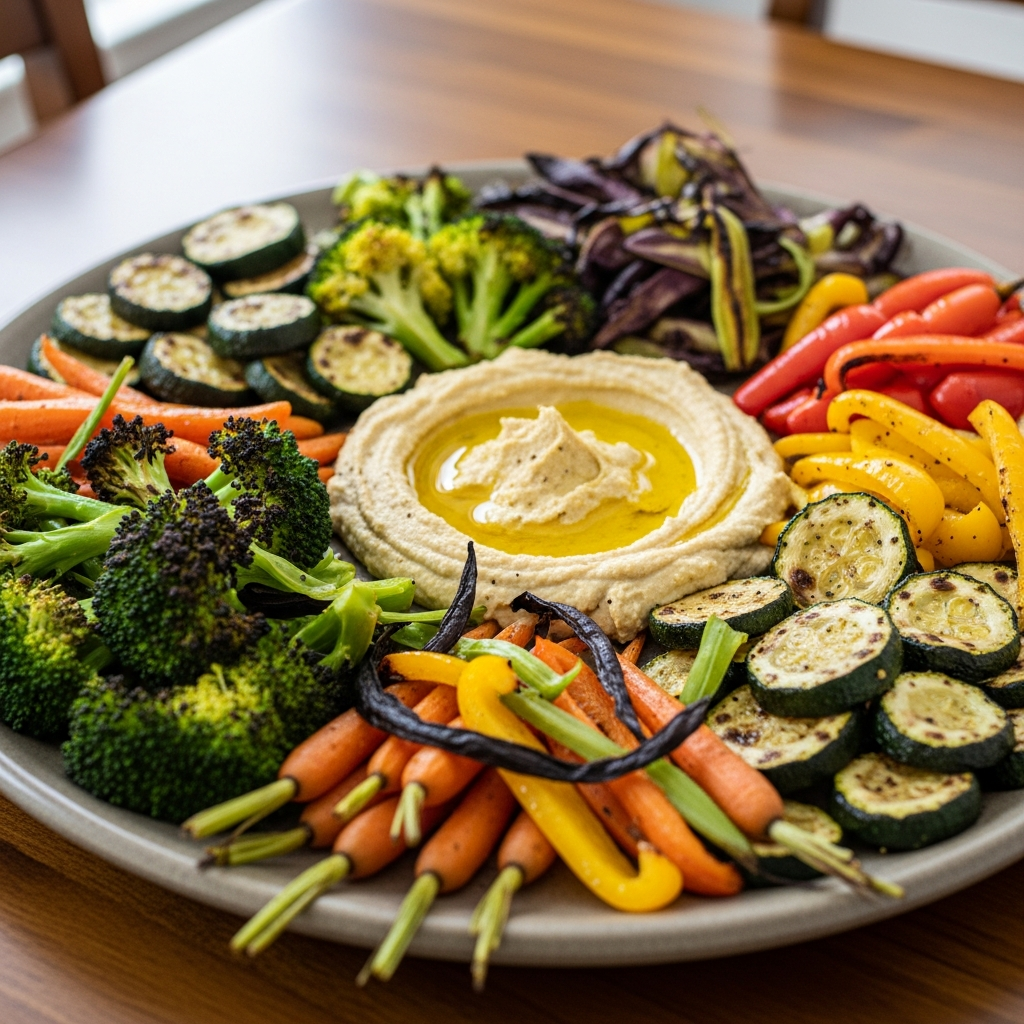
Even simple recipes can go wrong. Here’s how to steer clear of common pitfalls:
* Overcrowding the baking sheet: As mentioned, this is the biggest mistake. It leads to steamed, soggy vegetables instead of beautifully roasted ones.
* Under-seasoning: Bland vegetables are no fun! Always taste and adjust your seasonings.
* Overcooking vegetables: Watch your vegetables closely. They should be tender-crisp, not mushy.
* Using cold hummus: Let your store-bought hummus sit out for about 15-20 minutes before assembling. It spreads more easily and tastes better at room temperature.
* Rushing the assembly: Take a moment to arrange your vegetables nicely. Presentation really does enhance the eating experience.
Storage & Meal Prep
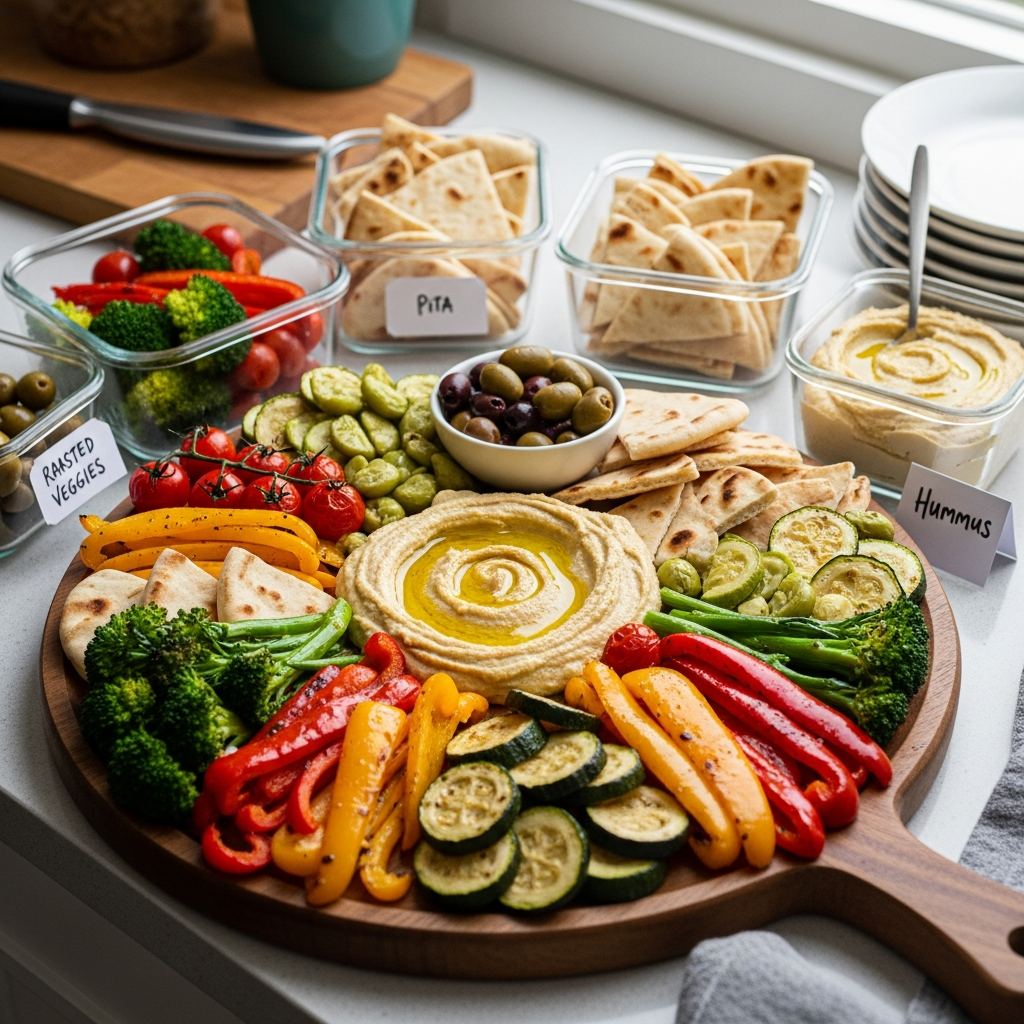
This platter is fantastic for making ahead and enjoying later!
* Roasted vegetables: Store leftover roasted vegetables in an airtight container in the refrigerator for up to 3-4 days. They are delicious cold or gently reheated.
* Hummus: Keep any leftover hummus in its original container or an airtight one in the fridge for up to 5-7 days.
* Assembled platter: If you have an assembled platter with leftovers, it’s best to store the vegetables and hummus separately. This helps maintain the best texture for both. If you must store them together, cover tightly and consume within 1-2 days.
Make-Ahead & Freezer Notes

This recipe shines as a make-ahead option for easy entertaining.
* Roasted vegetables: You can roast the vegetables 1-2 days in advance. Store them in the refrigerator and bring them to room temperature or warm slightly before assembling your platter.
* Hummus: If making your own hummus, prepare it up to 3-4 days ahead of time and store it in the fridge. Store-bought hummus is ready to go.
* Freezing roasted vegetables: While possible, freezing roasted vegetables can sometimes affect their texture, making them a bit softer when thawed. If you choose to freeze, spread them in a single layer on a baking sheet to flash freeze, then transfer to a freezer-safe bag for up to 2-3 months. Reheat from frozen in the oven.
* Freezing hummus: Hummus freezes surprisingly well! Transfer it to a freezer-safe container, leaving some headspace for expansion. It can be frozen for up to 3-4 months. Thaw in the refrigerator overnight and stir well before serving. You might need to add a touch more olive oil or lemon juice to restore its creaminess.
Serving Suggestions
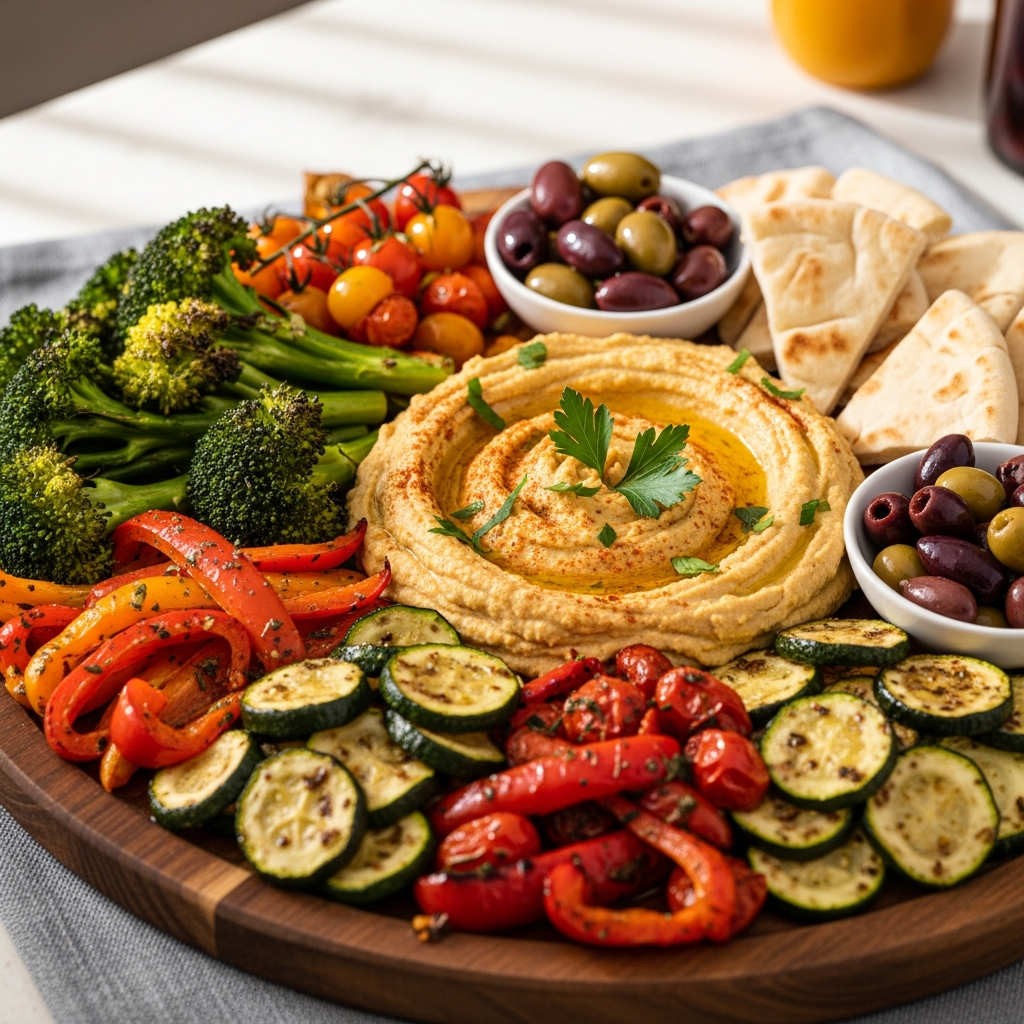
This roasted vegetable hummus platter is incredibly versatile and can be served in many ways:
* Appetizer: The perfect starter for any dinner party or casual get-together.
* Meze spread: Make it part of a larger Mediterranean-style spread with other dips, cheeses, and olives.
* Light lunch or dinner: Enjoy it as a satisfying main course, perhaps with a simple green salad on the side.
* Potlucks and picnics: It travels well and is always a hit at communal gatherings.
* Snack time: A healthy and flavorful snack throughout the day.