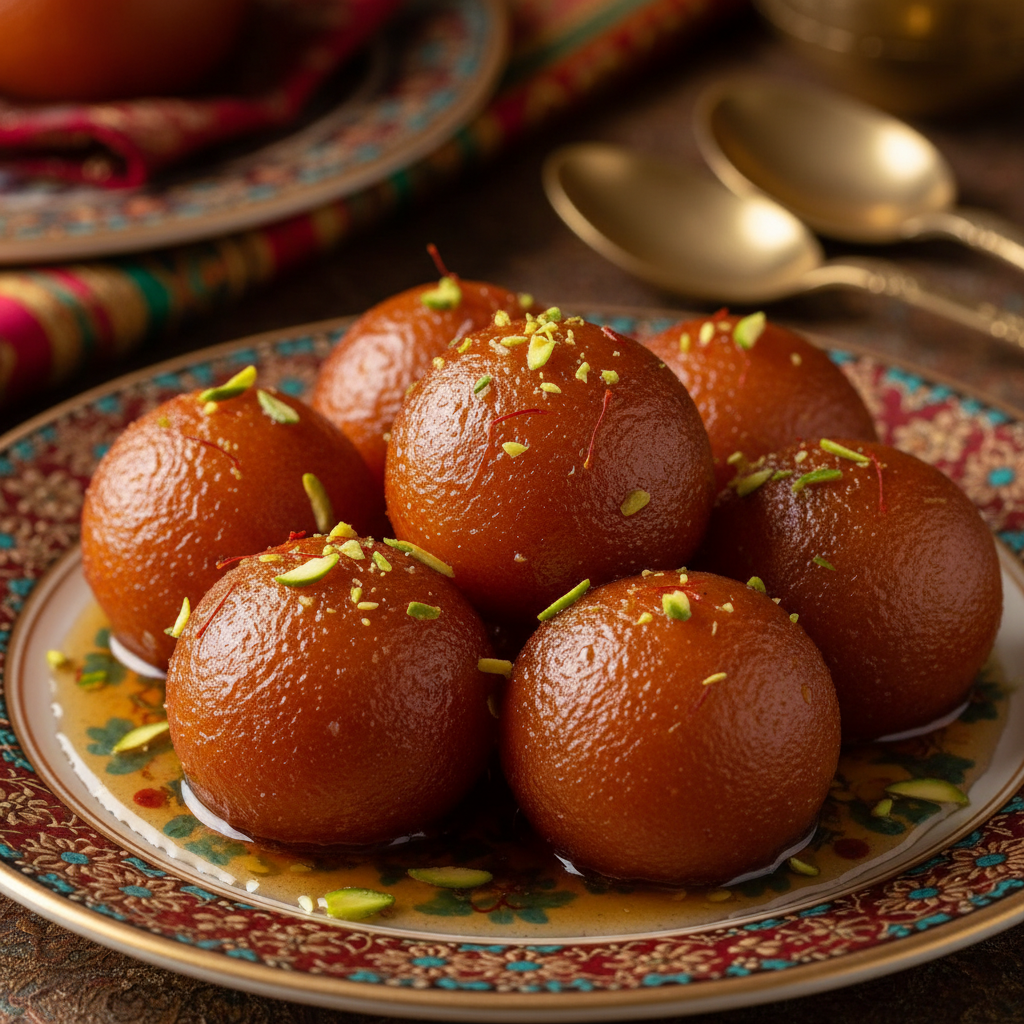
Welcome, sweet enthusiasts! If there’s one dessert that truly captures the heart and soul of Indian festivals, it’s the beloved Gulab Jamun. These soft, spongy, milk-solid-based dumplings, soaked in an aromatic sugar syrup, are more than just a treat; they’re a symbol of celebration, joy, and togetherness. While they might seem intimidating to make from scratch, I promise you, with this detailed, beginner-friendly guide, you’ll be whipping up a batch of the most heavenly Gulab Jamuns that taste just like your favorite sweet shop, or even better!
Forget those store-bought versions for a moment. Imagine biting into a warm, delicate Gulab Jamun, its sweetness perfectly balanced, dissolving on your tongue. That’s the magic we’re going to create today. Whether you’re preparing for Diwali, Eid, Holi, or simply craving something wonderfully sweet, this recipe is your golden ticket to dessert bliss. Let’s dive in and make some unforgettable memories, one delicious Gulab Jamun at a time!
History – Background of Gulab Jamun

The story of Gulab Jamun is as rich and sweet as the dessert itself. While its exact origins are debated, many culinary historians believe this delightful sweet has Persian roots. Some theories suggest it evolved from a fritter-like dessert brought to India by Central Asian invaders, possibly even linked to a dish prepared for the Mughal emperor Shah Jahan’s chief cook. The name ‘Gulab Jamun’ itself is a beautiful fusion: ‘Gulab’ comes from the Persian word for rose, referring to the rose water-scented syrup, and ‘Jamun’ refers to the fruit ‘Java Plum’ which the finished dessert resembles in shape and size.
Over centuries, it adapted to Indian tastes, incorporating local ingredients like ‘khoya’ (reduced milk solids), which gives it its unique texture and flavor. From royal kitchens to bustling street stalls, Gulab Jamun became an integral part of Indian culinary heritage, especially during festivals and special occasions. It’s a dessert that transcends regions and generations, continuing to be a cherished part of every celebration.
Why You’ll Love This Recipe

There are countless reasons why this particular Gulab Jamun recipe will become your new go-to. Here are just a few:
- Incredibly Soft Texture: Say goodbye to hard or rubbery jamuns! This recipe ensures a melt-in-your-mouth experience every single time.
- Authentic Flavor: We focus on traditional ingredients and techniques to deliver that classic, comforting Gulab Jamun taste you adore.
- Perfect for Celebrations: Impress your guests and family during any festival or special gathering with this homemade delicacy.
- Beginner-Friendly Steps: Each step is broken down with clear, simple instructions, making it accessible even if you’re new to Indian sweets.
- Customizable: Learn how to add your own twist with various flavorings and garnishes.
- Unbeatable Homemade Taste: There’s nothing quite like the satisfaction and superior taste of a dessert made with love in your own kitchen.
Ingredient Notes
Quality ingredients are the secret to exceptional Gulab Jamuns. Here’s what you’ll need and why each component is important:
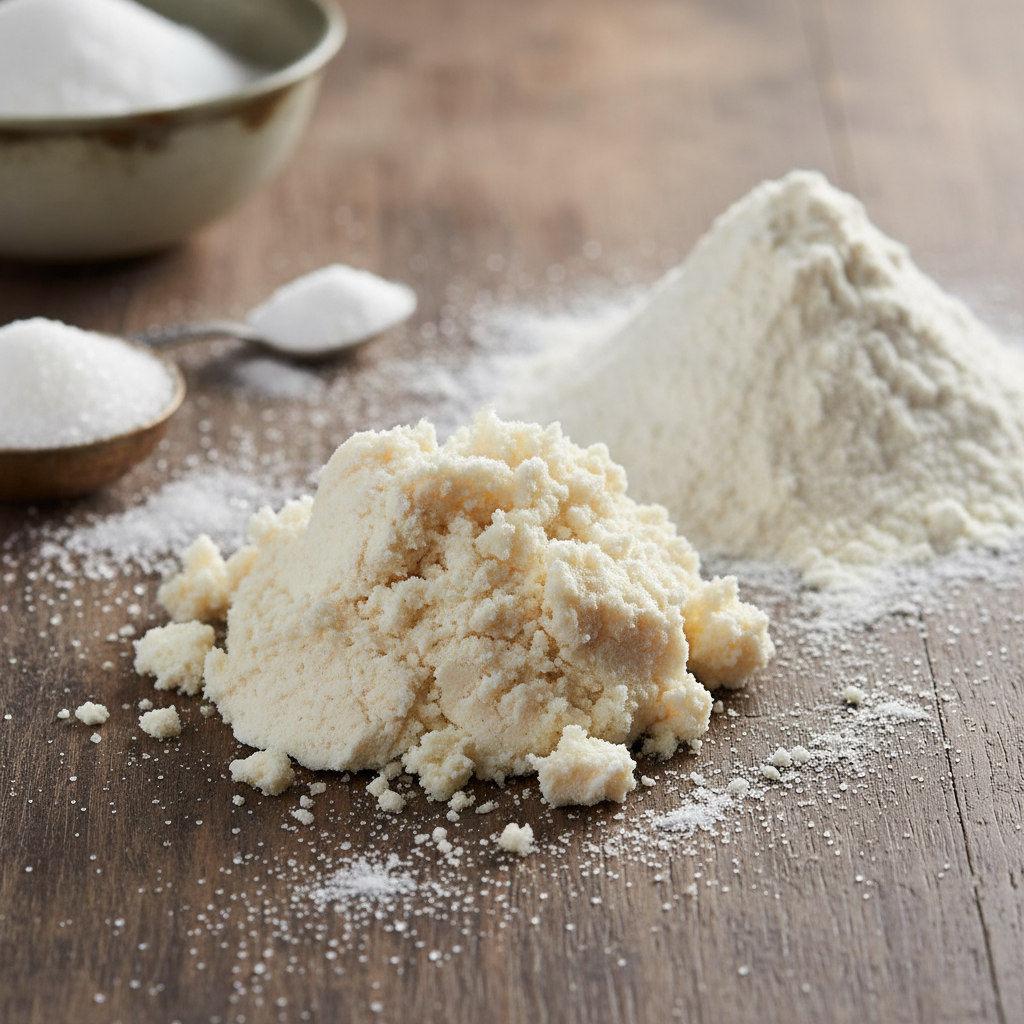
- Mawa / Khoya: This is the heart of Gulab Jamun. It’s reduced milk solids, which provide the rich, milky flavor and soft texture. You can find this at Indian grocery stores, or you can make it at home from full-fat milk. Ensure it’s fresh and unsweetened.
- All-Purpose Flour (Maida): A small amount is used as a binding agent. Too much will make the jamuns hard, so measure carefully.
- Baking Soda: This leavening agent helps the jamuns become soft and porous, allowing them to absorb the syrup beautifully. Again, a tiny pinch is all you need.
- Ghee or Oil for Frying: Traditionally, Gulab Jamuns are fried in ghee for an unparalleled flavor. However, a neutral-flavored oil (like canola or vegetable oil) works well too. Make sure it’s fresh for the best taste.
- Granulated Sugar: For the luscious sugar syrup.
- Water: To dissolve the sugar for the syrup.
- Cardamom Pods: Essential for flavoring the sugar syrup with its warm, fragrant notes. Gently crush them to release their aroma.
- Rose Water (or Saffron): Adds a beautiful floral aroma to the syrup, a signature touch for Gulab Jamun. A few drops are enough. Saffron strands steeped in warm milk can also be added for color and flavor.
Equipment Needed
Gathering your tools before you start makes the process smooth and enjoyable:
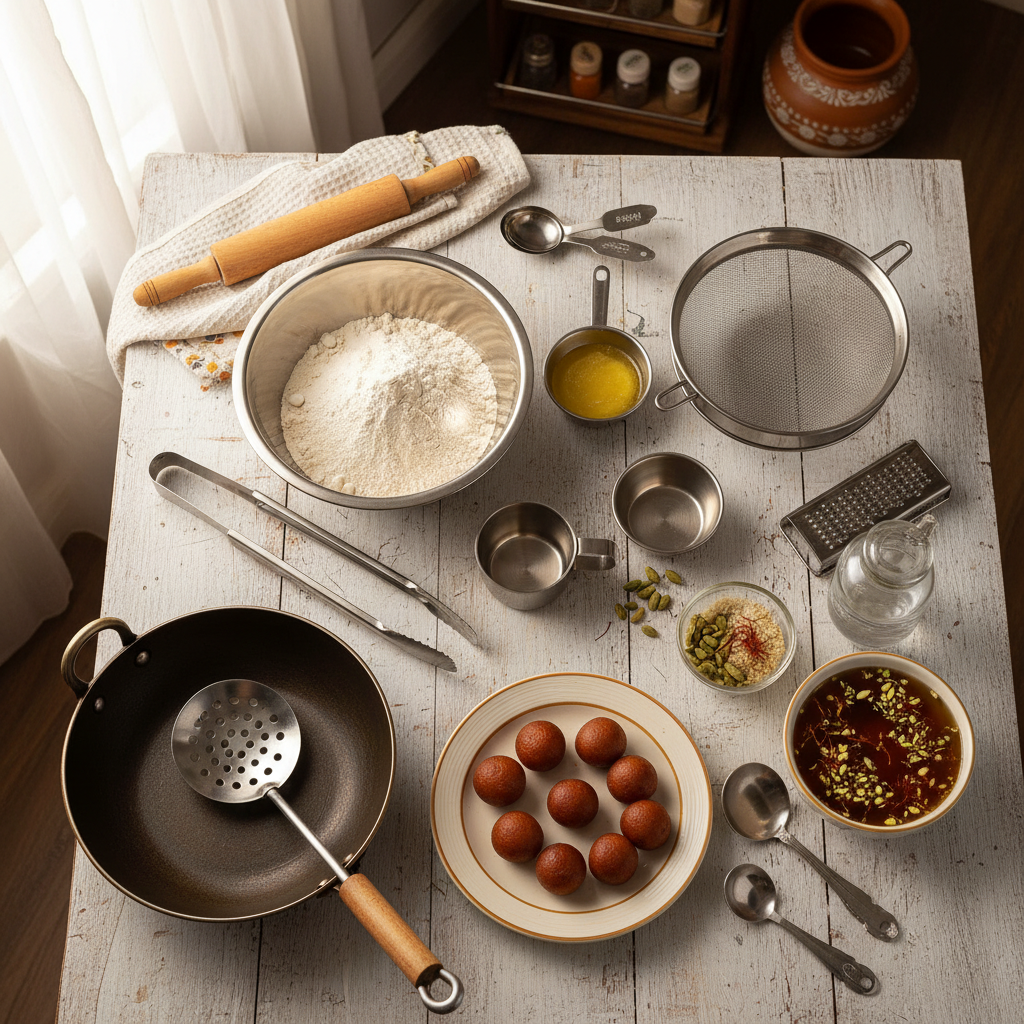
- Large Mixing Bowl: For kneading the dough.
- Heavy-Bottomed Pan / Saucepan: For preparing the sugar syrup. A heavy bottom prevents burning.
- Deep Frying Pan or Kadai: Essential for frying the jamuns. A kadai (traditional Indian wok) is ideal for even heat distribution.
- Slotted Spoon or Spider Skimmer: To carefully remove the fried jamuns from the hot oil.
- Measuring Cups and Spoons: Accuracy is key, especially for flour and baking soda.
- Plate or Tray: Lined with parchment paper for placing the formed jamuns.
- Kitchen Towel: For covering the dough to prevent it from drying out.
Full Recipe Card
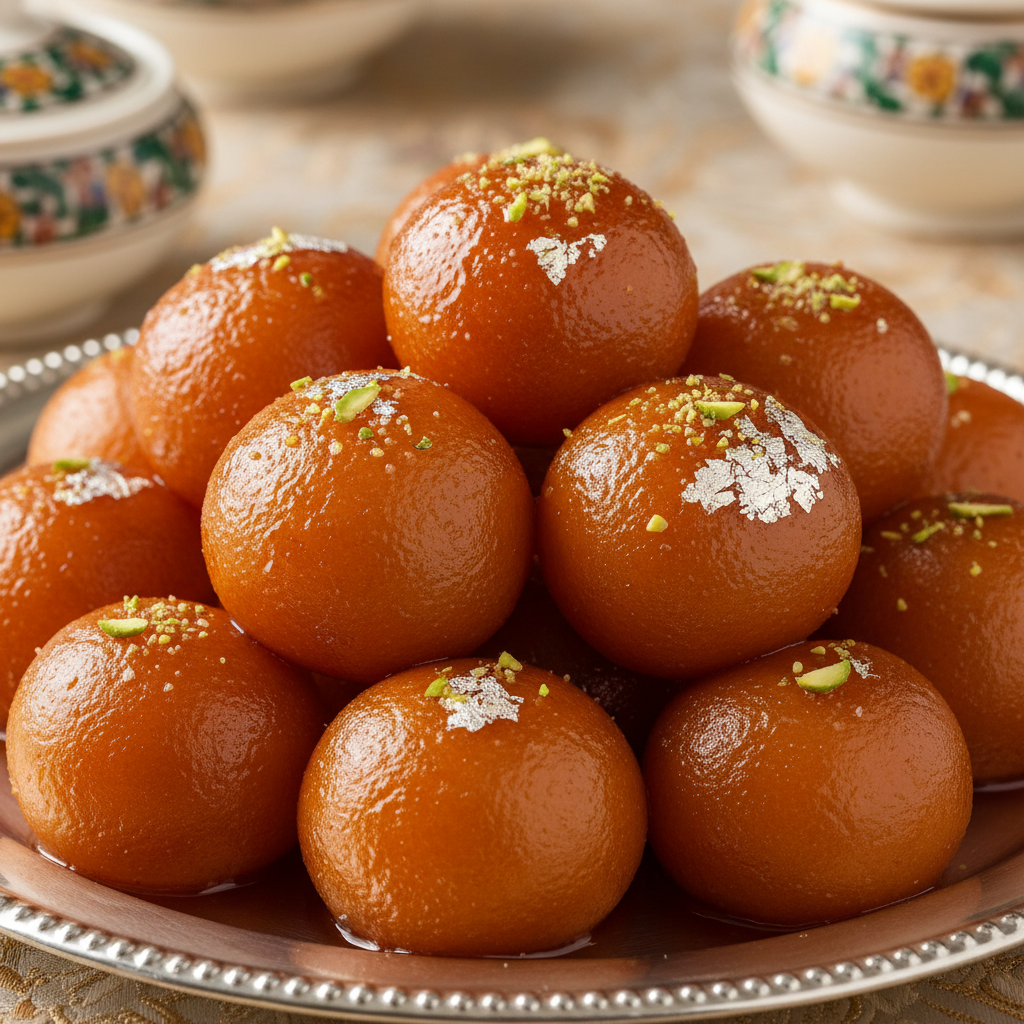
Ingredients for Gulab Jamun
- 200g fresh unsweetened mawa (khoya), grated or crumbled
- 2 tablespoons all-purpose flour (maida)
- 1/4 teaspoon baking soda
- 1 teaspoon ghee (clarified butter) + extra for greasing hands
- Oil or ghee for deep frying
Ingredients for Sugar Syrup
- 2 cups granulated sugar
- 2 cups water
- 4-5 green cardamom pods, lightly crushed
- 1/2 teaspoon rose water (optional)
- Few strands of saffron (optional)
Instructions for Making Gulab Jamun
- Prepare the Sugar Syrup: In a heavy-bottomed pan, combine sugar, water, and crushed cardamom pods. Bring to a boil over medium heat, stirring until the sugar dissolves completely. Reduce heat and simmer for 5-7 minutes until the syrup is slightly sticky (no specific string consistency needed). Remove from heat, stir in rose water and saffron (if using), and keep warm.
- Prepare the Gulab Jamun Dough: In a large mixing bowl, gently crumble or grate the mawa. Ensure there are no lumps. Add the all-purpose flour and baking soda. Add 1 teaspoon of ghee.
- Knead the Dough: Using the heel of your palm, gently knead the mixture for about 5-7 minutes until it forms a smooth, soft dough. The dough should be pliable and free of cracks. Do not over-knead, as this can make the jamuns hard. Cover the dough with a damp cloth to prevent it from drying.
- Form the Jamuns: Grease your palms lightly with ghee. Take small portions of the dough (about 1-inch in diameter) and roll them into smooth, crack-free balls. Ensure they are perfectly smooth, as any cracks will cause them to break during frying. You can also make cylindrical or oval shapes.
- Fry the Jamuns: Heat oil or ghee in a deep frying pan or kadai over low-medium heat. The oil should not be too hot; a good test is to drop a tiny piece of dough – it should slowly rise to the surface without browning too quickly. Carefully add the formed jamuns, a few at a time, ensuring they don’t overcrowd the pan.
- Cook Evenly: Fry the jamuns on low heat, gently turning them with a slotted spoon, until they are evenly golden brown on all sides. This slow frying ensures they cook through and absorb the syrup well. This process can take 10-15 minutes per batch.
- Soak in Syrup: Once golden brown, remove the fried jamuns with a slotted spoon and immediately transfer them to the warm sugar syrup. Let them soak for at least 2-3 hours, or ideally overnight, for them to become soft, spongy, and fully absorb the syrup.
- Serve: Serve warm, garnished with slivered pistachios or almonds, if desired.
Recipe Notes
- Mawa Quality: The quality of your mawa makes a huge difference. Fresh, good quality mawa yields the best results.
- Dough Consistency: The dough should be soft and smooth. If it’s too dry, add a tiny bit of milk; if too sticky, a tiny bit of flour, but be careful not to add too much.
- Frying Temperature: This is crucial! Low and slow frying ensures the jamuns cook from the inside out and develop a beautiful, even color. High heat will brown them quickly on the outside, leaving them raw inside.
- Syrup Warmth: Ensure the syrup is warm when you add the fried jamuns. This helps them soak up the syrup more effectively.
Tips & Variations
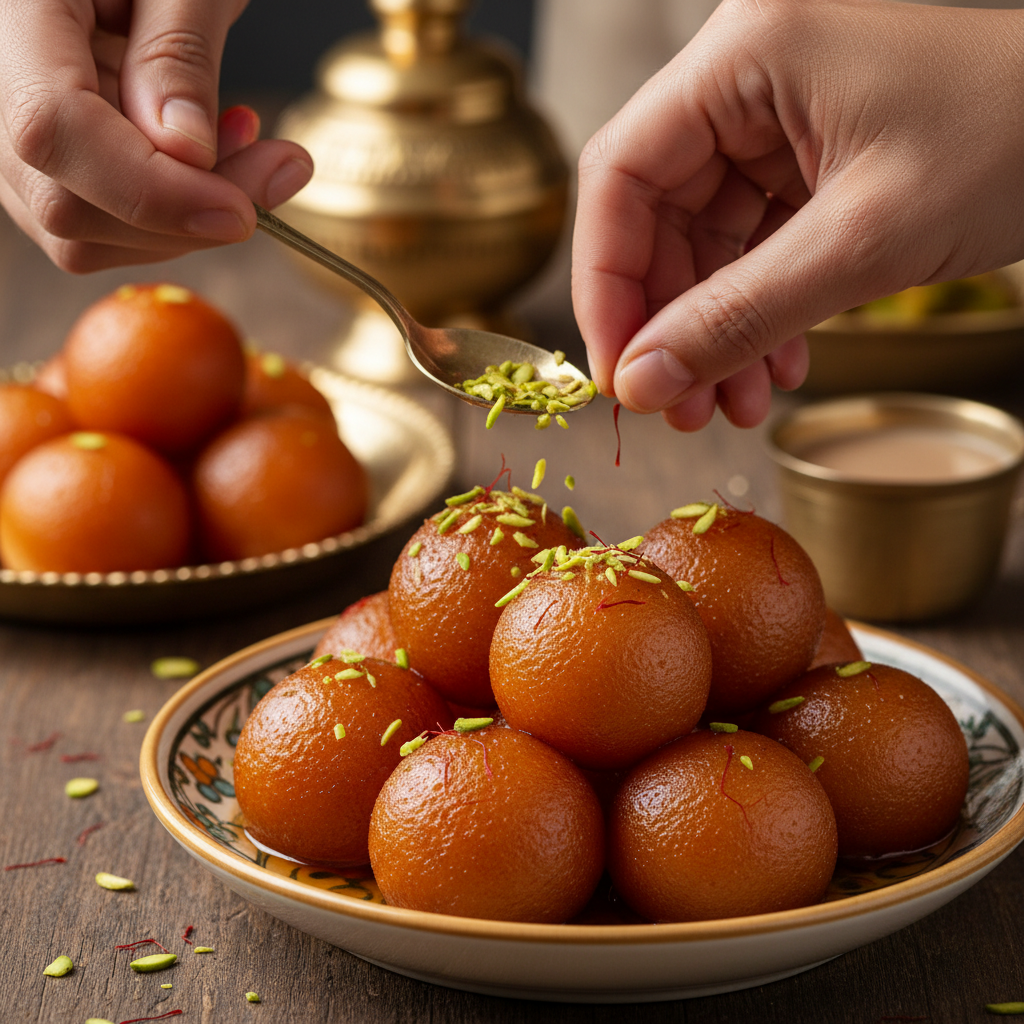
Once you’ve mastered the basic recipe, feel free to experiment with these delightful variations:
- Saffron Infusion: Add a pinch of saffron strands to the warm sugar syrup for a luxurious aroma and subtle color.
- Nutty Center: For a delightful surprise, stuff a tiny piece of pistachio, almond, or cashew inside each dough ball before rolling.
- Cardamom Powder: You can add a pinch of cardamom powder directly to the dough for an extra aromatic kick.
- Rose Petal Garnish: Garnish with fresh or dried rose petals for an elegant touch.
- Shape Variations: Instead of traditional round balls, try shaping them into small cylinders or ovals for a different presentation.
- Orange Zest: A tiny bit of orange zest in the syrup can add a refreshing citrus note.
Pro Chef Tips
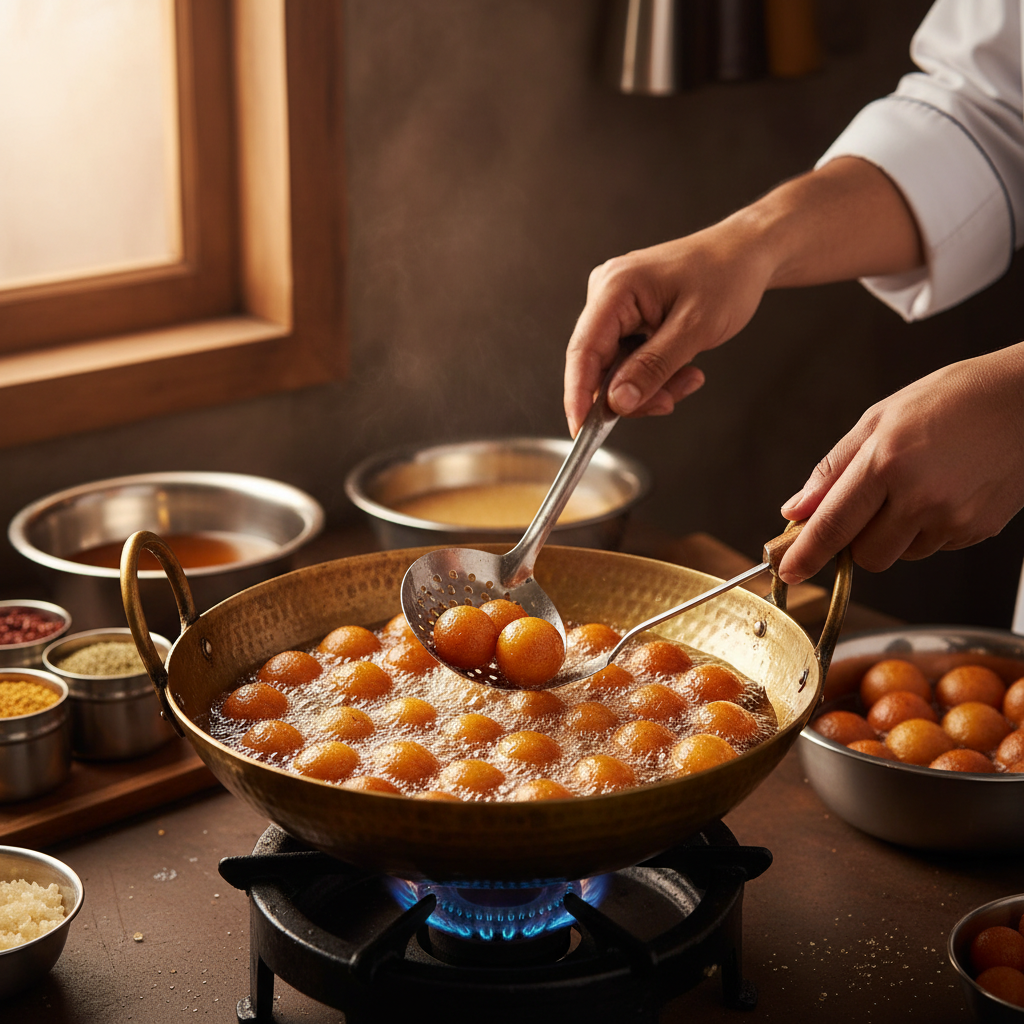
Here are some insider tips from experienced chefs to elevate your Gulab Jamun game:
- Kneading is Key, but Don’t Overdo It: The goal is a smooth, crack-free dough. Gently press and rub the mawa and flour mixture with the heel of your palm for 5-7 minutes. This develops the gluten just enough for structure without making it tough. Think gentle massage, not aggressive kneading.
- The “Float Test” for Oil Temperature: Before frying a batch, drop a tiny crumb of dough into the oil. If it immediately sinks and stays at the bottom, the oil is too cold. If it sizzles violently and browns instantly, it’s too hot. The ideal is for the crumb to slowly rise to the surface and gently start to brown.
- Consistent Ball Size: Try to make all your Gulab Jamun balls roughly the same size. This ensures they cook evenly and soak up the syrup uniformly.
- Don’t Rush the Frying: Patience is a virtue here. Frying on low heat for a longer duration allows the jamuns to cook thoroughly from the inside and achieve that beautiful, even golden-brown crust.
- Warm Syrup, Not Hot: The syrup should be pleasantly warm when you add the fried jamuns. If it’s too hot, the jamuns might shrivel; if it’s cold, they won’t absorb the syrup as effectively.
Common Mistakes to Avoid
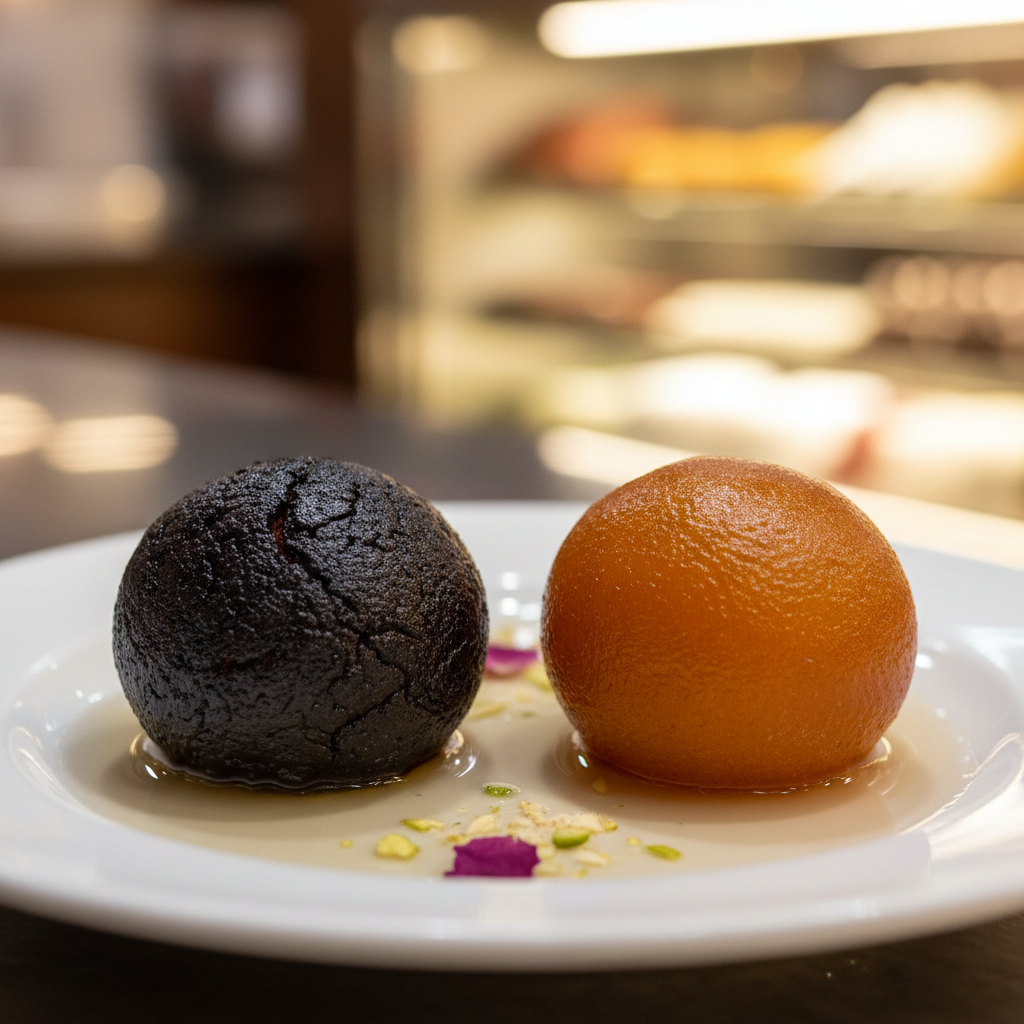
Even seasoned cooks can stumble, but by being aware of these common pitfalls, you can ensure your Gulab Jamuns turn out perfect every time:
- Over-Kneading the Dough: This is a major culprit for hard, dense Gulab Jamuns. Gentle kneading is sufficient to bring the dough together.
- Too Much Flour or Baking Soda: Excess flour makes them tough, and too much baking soda can cause them to crack or become brittle during frying. Stick to the precise measurements.
- Cracks in the Dough Balls: If your rolled balls have cracks, they are likely to break apart in the hot oil. Ensure they are perfectly smooth before frying. If your dough is too dry, add a tiny bit of milk and knead gently.
- Frying at the Wrong Temperature: Frying in oil that’s too hot will burn the outside while leaving the inside raw. Oil that’s too cold will make the jamuns absorb too much oil, making them greasy. Always maintain a low-medium, consistent heat.
- Not Soaking Long Enough: For that signature soft, spongy texture, Gulab Jamuns need ample time to soak in the warm syrup. Don’t rush this step; overnight soaking is often best.
- Overcrowding the Frying Pan: Frying too many jamuns at once will drop the oil temperature and prevent them from cooking evenly. Fry in small batches.
Storage & Meal Prep
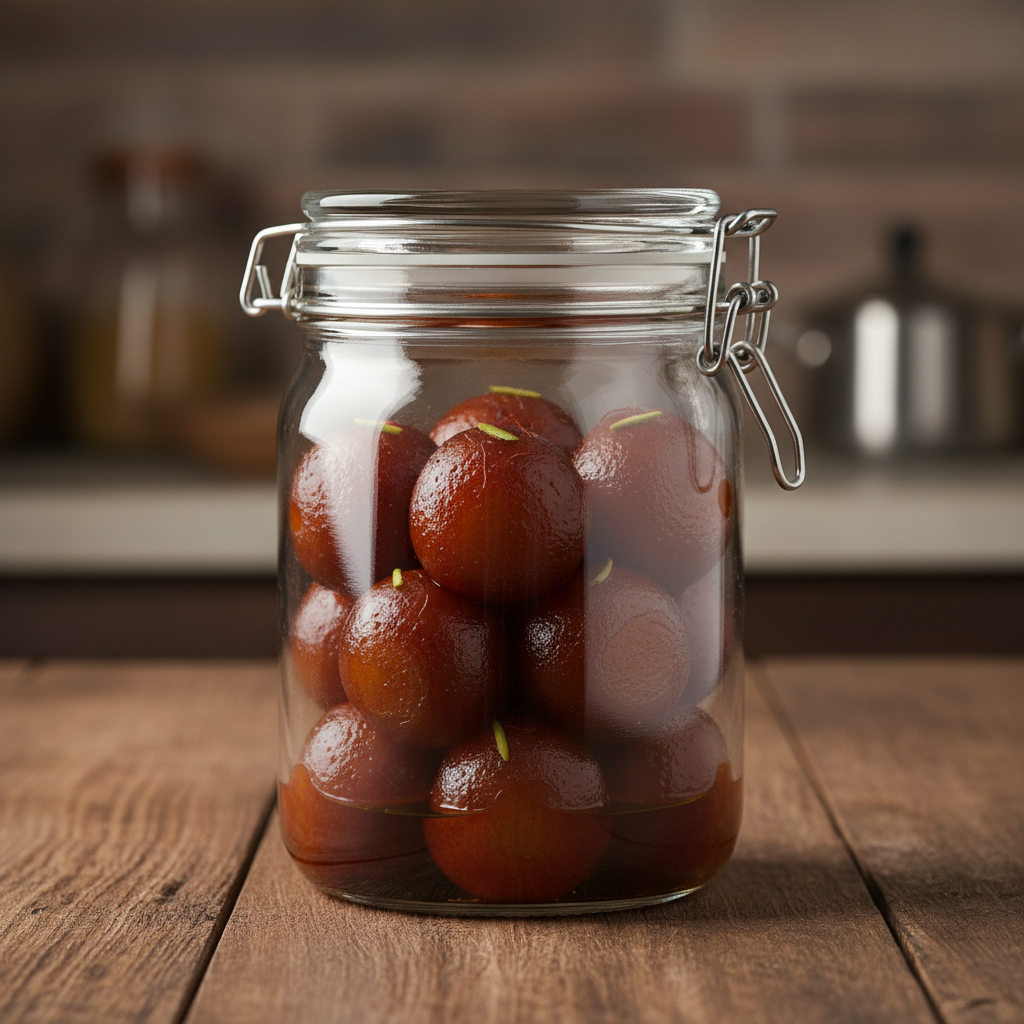
Proper storage ensures your delicious Gulab Jamuns stay fresh and delightful for longer:
- Refrigeration: Store soaked Gulab Jamuns in an airtight container in the refrigerator for up to 5-7 days. Ensure they are fully submerged in the sugar syrup.
- Serving Warm: When ready to serve, gently warm them in the microwave for 15-30 seconds, or heat them gently in a saucepan over low heat until warm throughout.
- Avoid Freezing Soaked Jamuns: While you can freeze the dough (see below), freezing fully soaked Gulab Jamuns is not recommended as it can alter their texture and make them a bit rubbery once thawed.
Make-Ahead & Freezer Notes
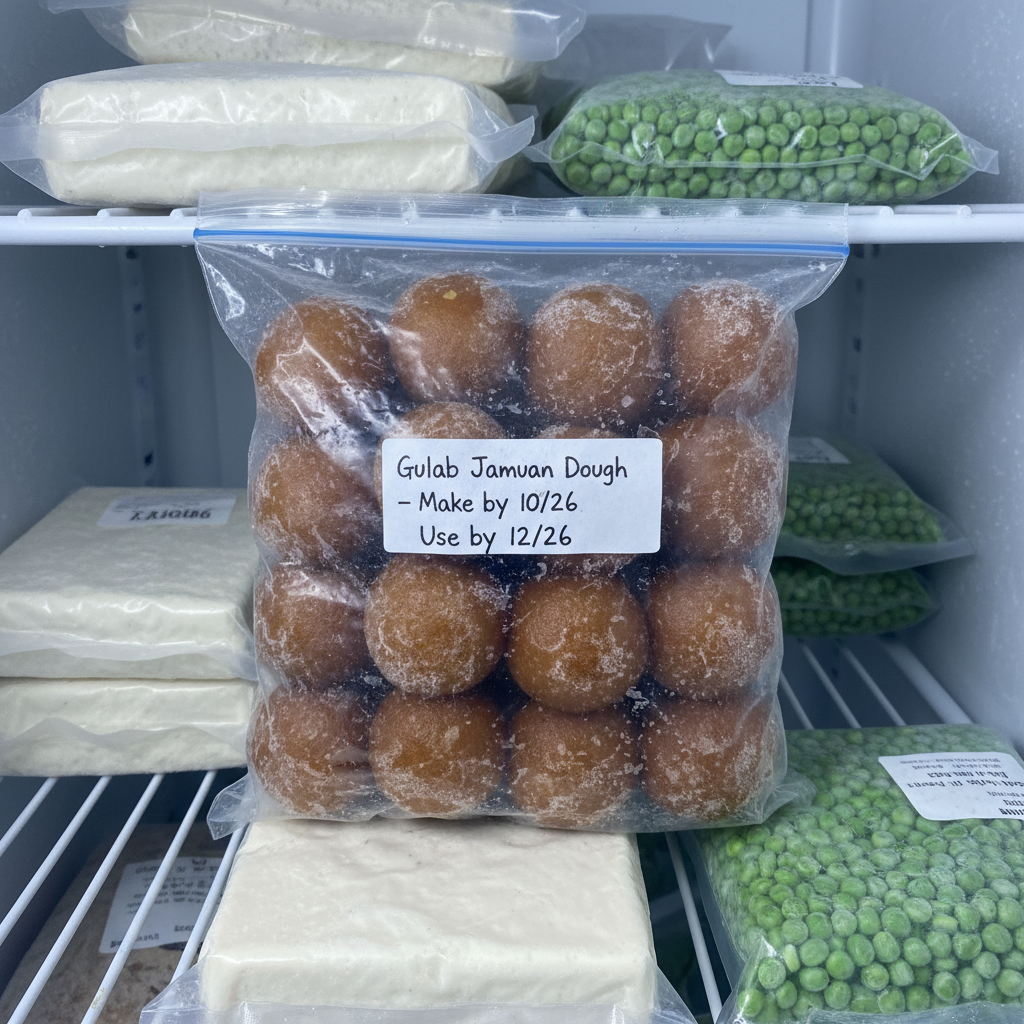
Planning ahead can make festive cooking much less stressful:
- Dough Preparation: You can prepare the Gulab Jamun dough a day in advance. Store it wrapped tightly in plastic wrap or in an airtight container in the refrigerator. Let it come to room temperature before rolling.
- Freezing Dough Balls: You can roll the dough into balls and freeze them before frying. Place the un-fried dough balls on a tray lined with parchment paper and freeze until solid. Once frozen, transfer them to a freezer-safe bag or container. They can be stored for up to 1-2 months.
- Frying from Frozen: When ready to use, you can fry the frozen dough balls directly. Just ensure your oil is at the correct low-medium temperature and be prepared for them to take a little longer to cook through.
- Syrup Ahead of Time: The sugar syrup can also be made a few days in advance and stored in the refrigerator. Gently warm it before adding the fried jamuns.
Serving Suggestions
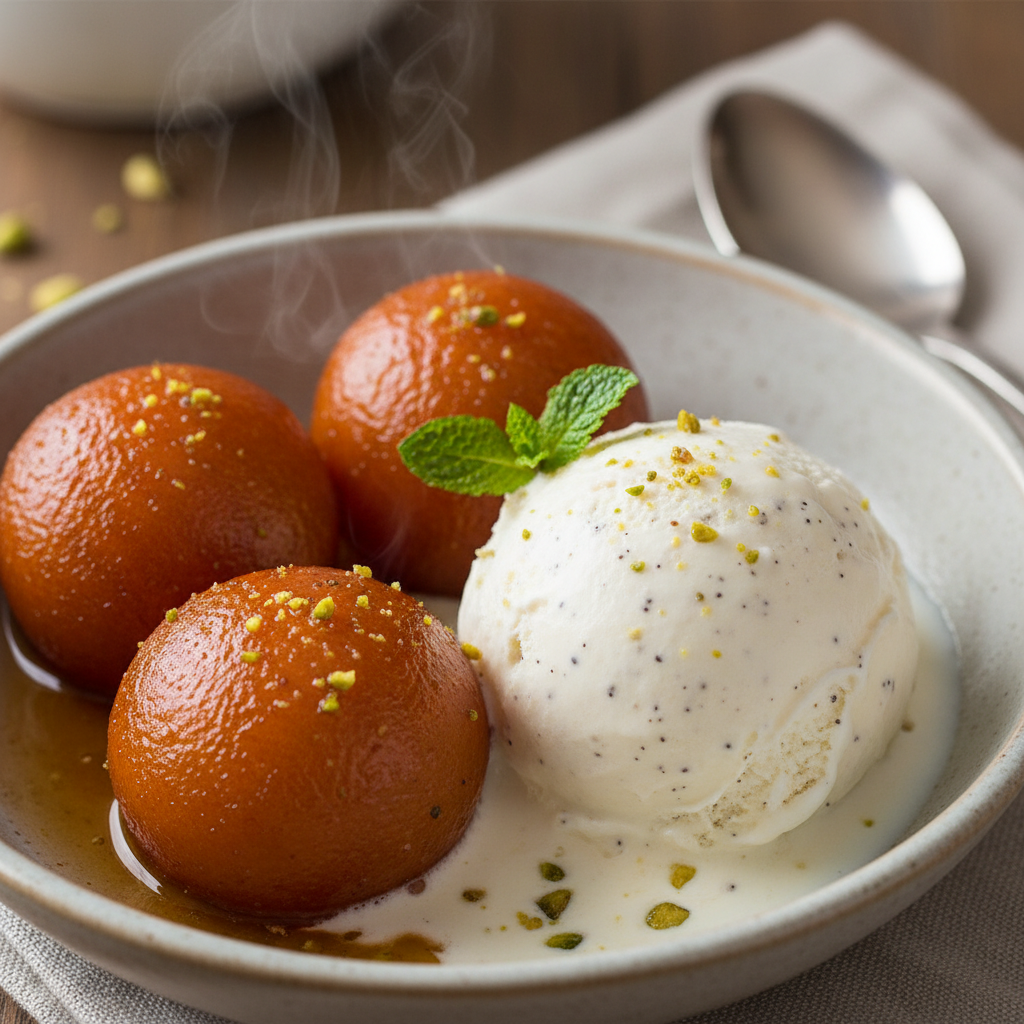
Gulab Jamuns are wonderful on their own, but here are some delightful ways to serve them:
- Warm or Cold: Traditionally, they are served warm, allowing the syrup to be more fluid and the jamuns incredibly soft. However, chilled Gulab Jamuns also have a unique charm, especially on a hot day.
- With Ice Cream: A scoop of vanilla bean ice cream or kulfi alongside warm Gulab Jamuns is a match made in heaven. The contrast of warm and cold, sweet and creamy, is simply divine.
- Garnish with Nuts: A sprinkle of slivered pistachios, almonds, or cashews adds a lovely textural contrast and a touch of elegance.
- Fresh Cream or Rabri: Serve with a dollop of fresh cream or a side of rabri (sweetened condensed milk dessert) for an extra rich experience.
- Fruit Compote: A spoonful of a berry or mango compote can add a refreshing fruity twist.