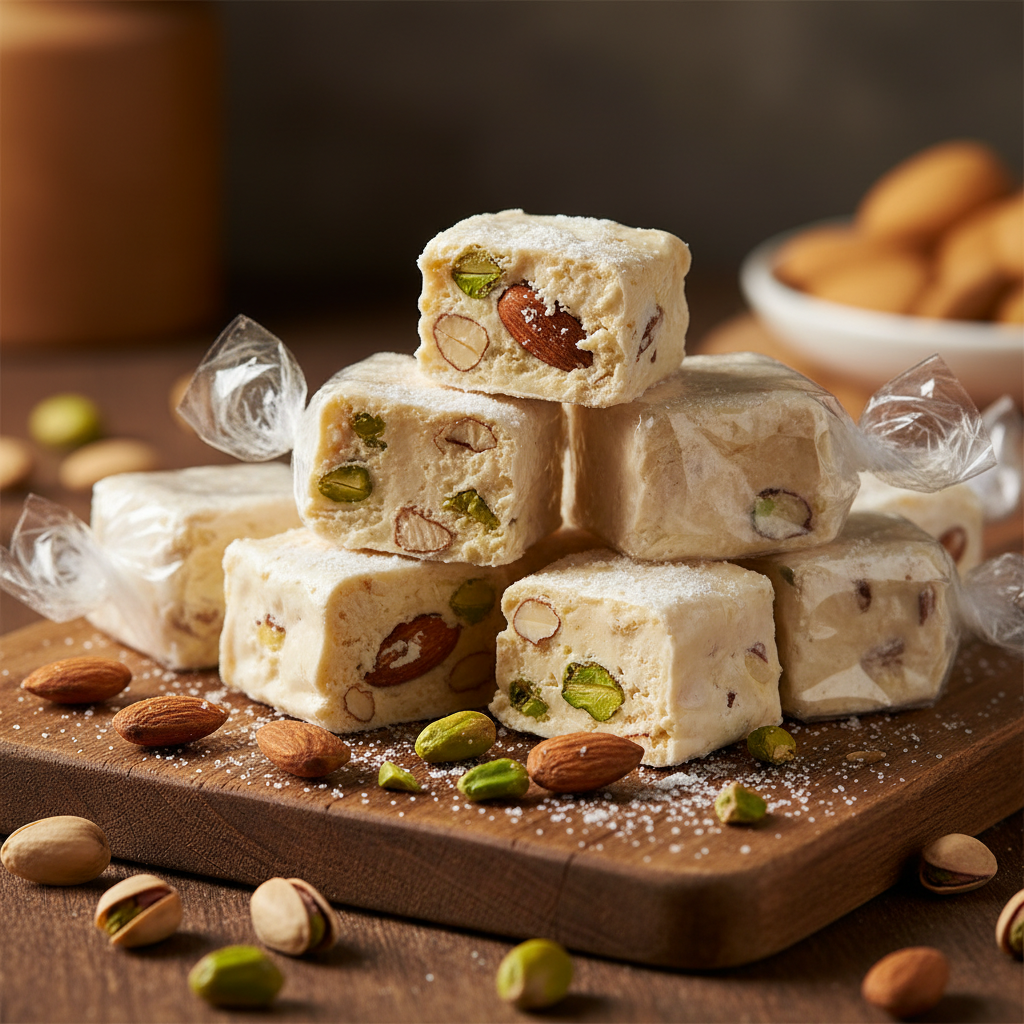
Welcome, fellow sweet tooths! There’s something truly magical about nougat. That delicate, airy chew, the sweet honeyed flavor, and the satisfying crunch of nuts – it’s a confection that feels both luxurious and comforting. While it might seem like a tricky treat to make at home, I’m here to tell you it’s entirely achievable, and incredibly rewarding. Forget those hard, sticky store-bought versions; we’re diving into a recipe for nougat that’s wonderfully soft, delightfully chewy, and bursting with homemade charm. Get ready to impress your friends, family, and most importantly, your taste buds!
A Sweet History of Nougat

Nougat, a confection with a rich and storied past, has delighted palates for centuries across various cultures. Its origins are often traced back to the Middle East, with early recipes appearing in 10th-century Baghdad. From there, it traveled through the Mediterranean, evolving into the diverse forms we know today. In France, it’s famous as ‘nougat de Montélimar,’ a staple of Provençal cuisine. Italy boasts ‘torrone,’ often enjoyed during holidays. Spain has ‘turrón,’ particularly popular at Christmas. Each region added its unique twist, from different nuts to varying textures, but the core elements of honey, sugar, egg whites, and nuts remained. Making nougat connects us to this long, sweet history, bringing a piece of culinary heritage into our own kitchens.
Why You’ll Love This Recipe
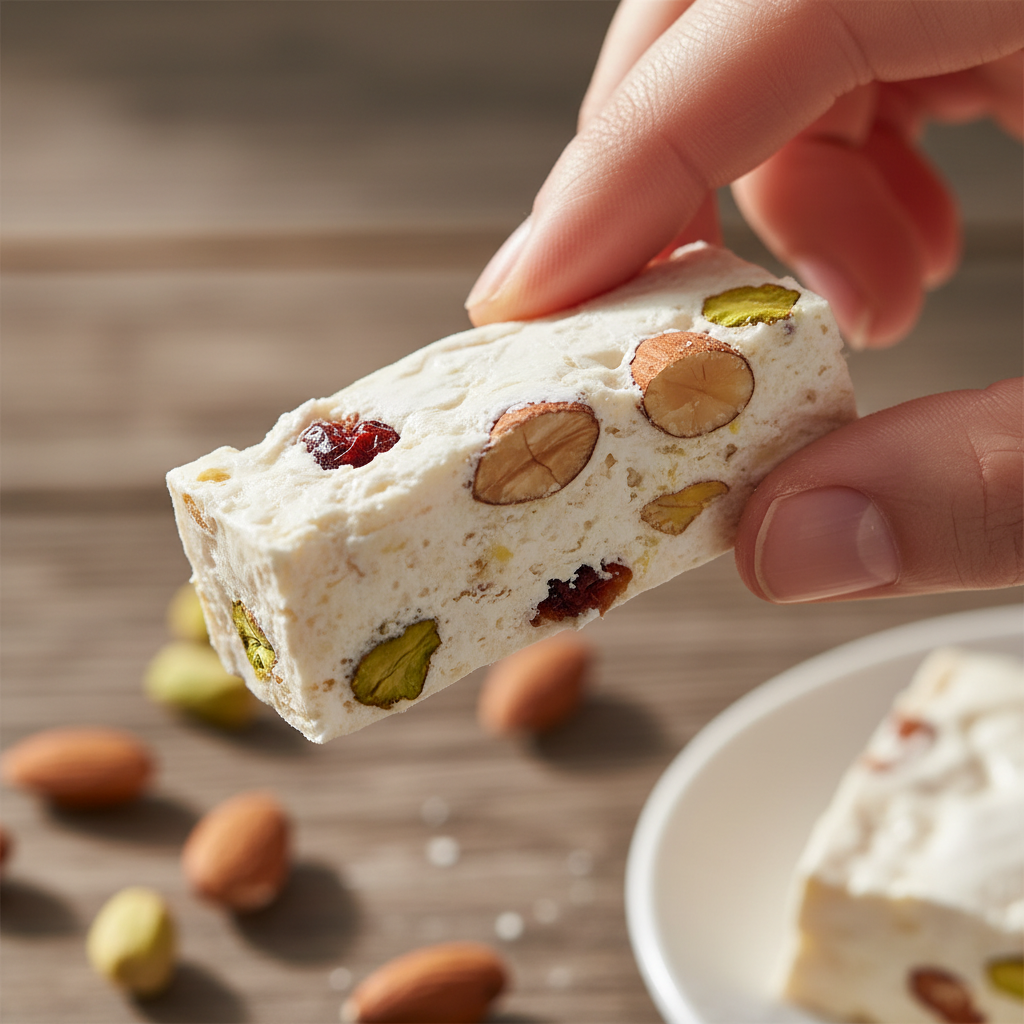
- Beginner-Friendly This recipe breaks down the process into simple, manageable steps, perfect for first-time nougat makers.
- Soft and Chewy Texture Say goodbye to rock-hard nougat! This recipe promises a delightful, yielding chew.
- Customizable Easily swap out nuts or add dried fruits to suit your preferences.
- Impressive Results Homemade nougat looks and tastes incredibly gourmet, making it perfect for gifts.
- Pure Ingredients You control exactly what goes into your sweet treat.
Ingredient Notes
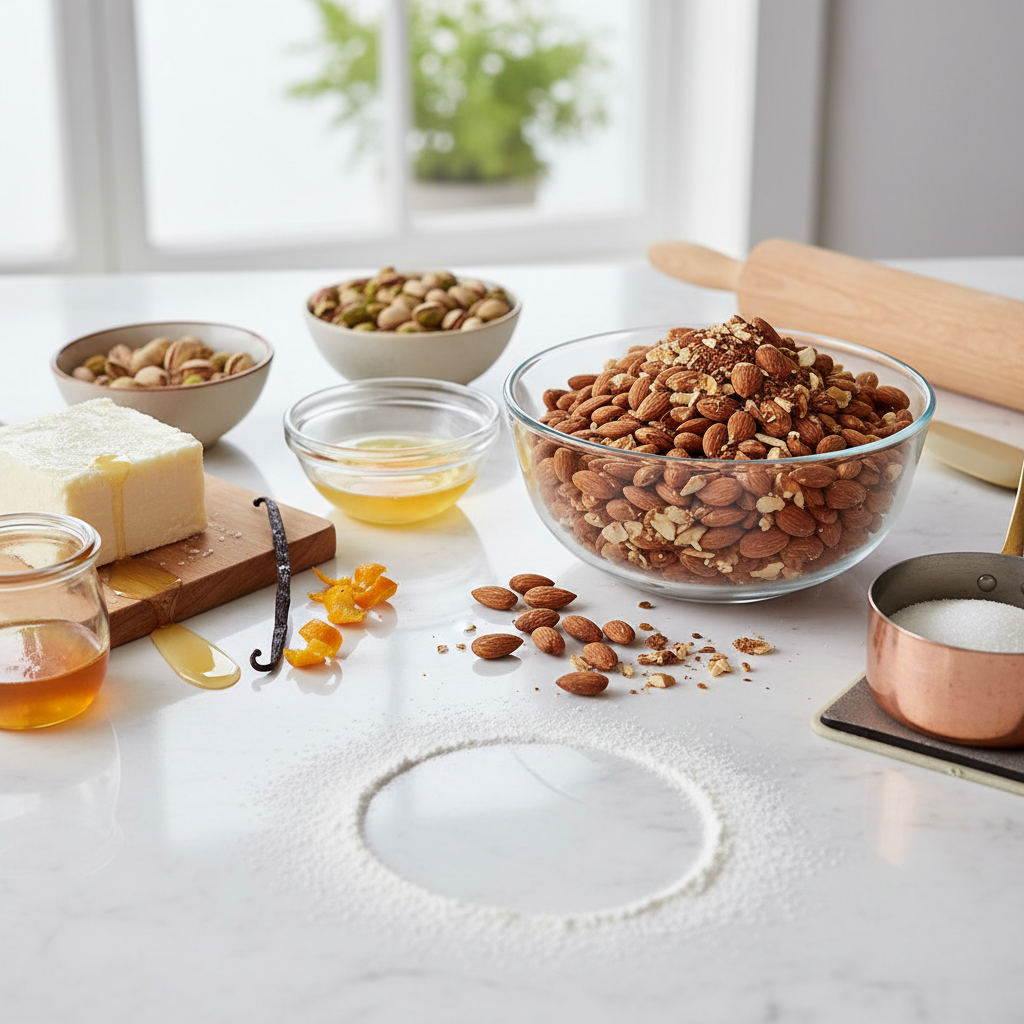
Quality ingredients are key to a truly delicious nougat. Here’s what you’ll need and why each component matters:
- Granulated Sugar This forms the base of our syrup, providing sweetness and structure.
- Honey Essential for that classic nougat flavor and a touch of elasticity. Use good quality honey for the best taste.
- Water Helps dissolve the sugar and honey for the syrup.
- Egg Whites These are whipped into a fluffy meringue, giving nougat its characteristic lightness and airy texture. Ensure they are at room temperature for best whipping results.
- Vanilla Extract Adds a warm, aromatic depth of flavor.
- Roasted Almonds and Pistachios The stars of the show! Roasting them beforehand enhances their flavor and crunch. You can use any nuts you prefer – hazelnuts, walnuts, or pecans work wonderfully too.
- Powdered Sugar and Cornstarch A mixture of these is used to dust the nougat to prevent sticking and make it easier to handle and cut.
- Edible Wafer Paper (Optional) This is traditional for nougat, preventing sticking and making it easy to pick up. You can find it online or in specialty baking stores.
Equipment Needed

- Heavy-Bottomed Saucepan For making the sugar syrup. A heavy bottom prevents scorching.
- Candy Thermometer Absolutely crucial for accurate temperature readings of the syrup. Don’t skip this!
- Stand Mixer with Whisk Attachment While you can use a hand mixer, a stand mixer makes the process much easier, especially when slowly incorporating hot syrup.
- Heatproof Spatula or Wooden Spoon For stirring and folding.
- 9×13 inch Baking Pan Lined with parchment paper and ideally wafer paper.
- Parchment Paper For lining the pan and preventing sticking.
- Sharp Knife or Pizza Cutter For neatly cutting the nougat once it’s set.
Full Recipe Card
Ingredients
- 2 cups (400g) granulated sugar
- 1/2 cup (120ml) water
- 1/2 cup (160g) honey
- 2 large egg whites, at room temperature
- 1 teaspoon vanilla extract
- 1 1/2 cups (180g) roasted almonds, roughly chopped
- 1/2 cup (60g) roasted pistachios, roughly chopped
- 1/4 cup powdered sugar, for dusting
- 2 tablespoons cornstarch, for dusting
- Edible wafer paper (optional), enough to line a 9×13 inch pan
Instructions
- Prepare Your Pan Lightly grease a 9×13 inch baking pan. Line it with parchment paper, allowing an overhang on the sides for easy lifting. If using, place a sheet of edible wafer paper on the bottom of the parchment-lined pan.
- Roast Nuts If your nuts aren’t already roasted, spread them on a baking sheet and roast in a preheated oven at 300°F (150°C) for 8-10 minutes, or until fragrant. Let them cool completely.
- Make the Syrup In a heavy-bottomed saucepan, combine the granulated sugar, water, and honey. Stir gently over medium heat until the sugar dissolves. Once dissolved, stop stirring. Insert your candy thermometer. Bring the syrup to a boil and cook until it reaches 290°F (143°C), the soft-crack stage. This will take about 10-15 minutes.
- Whip Egg Whites While the syrup is cooking, in the bowl of a stand mixer fitted with the whisk attachment, beat the egg whites on medium-high speed until they form stiff peaks.
- Combine Syrup and Meringue Once the syrup reaches 290°F (143°C), immediately remove it from the heat. With the mixer running on low speed, slowly and carefully pour the hot syrup in a thin, steady stream into the whipped egg whites. Be careful not to pour it directly onto the whisk.
- Beat Until Thick Increase the mixer speed to high and beat the mixture for 10-15 minutes, or until it becomes very thick, glossy, and holds its shape. The bowl should also cool down significantly to the touch.
- Fold in Flavor and Nuts Add the vanilla extract and fold in the roasted almonds and pistachios using a heatproof spatula. Mix until just combined.
- Press into Pan Quickly transfer the nougat mixture into the prepared baking pan. It will be very sticky! Use an oiled spatula or your hands (lightly oiled or dusted with powdered sugar) to press it evenly into the pan. If using, place another sheet of wafer paper on top and gently press down.
- Chill and Set Dust the top with a mixture of powdered sugar and cornstarch. Cover the pan with plastic wrap and let it set at room temperature for at least 4-6 hours, or preferably overnight. You can also refrigerate it for faster setting.
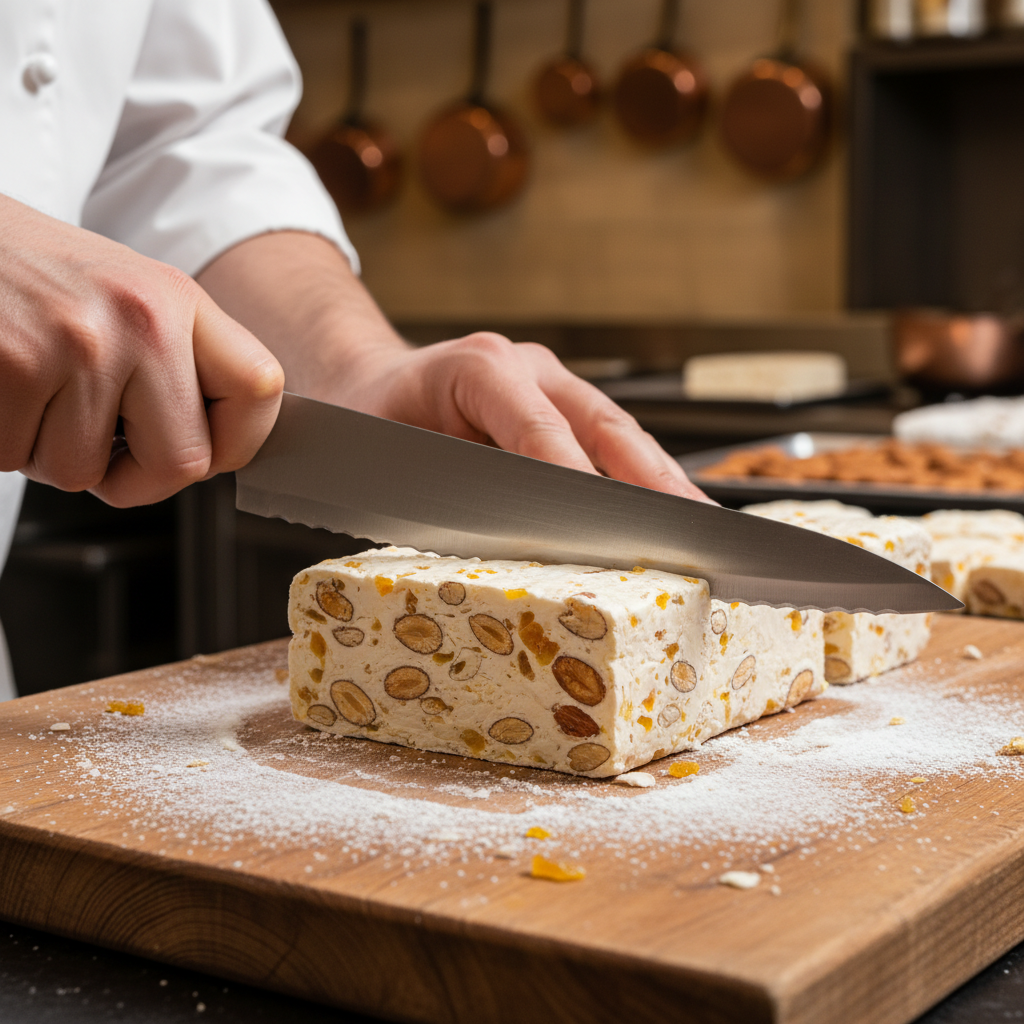
- Cut and Serve Once firm, lift the nougat out of the pan using the parchment paper overhangs. Place it on a cutting board. Lightly oil a sharp knife or a pizza cutter and cut the nougat into desired squares or rectangles. Dust with more powdered sugar if desired.
Notes
Work quickly once the syrup is ready, as the nougat will start to set. Don’t be afraid to oil your hands or spatula to handle the sticky mixture. Ensure your candy thermometer is accurate by testing it in boiling water (it should read 212°F/100°C).
Tips and Variations
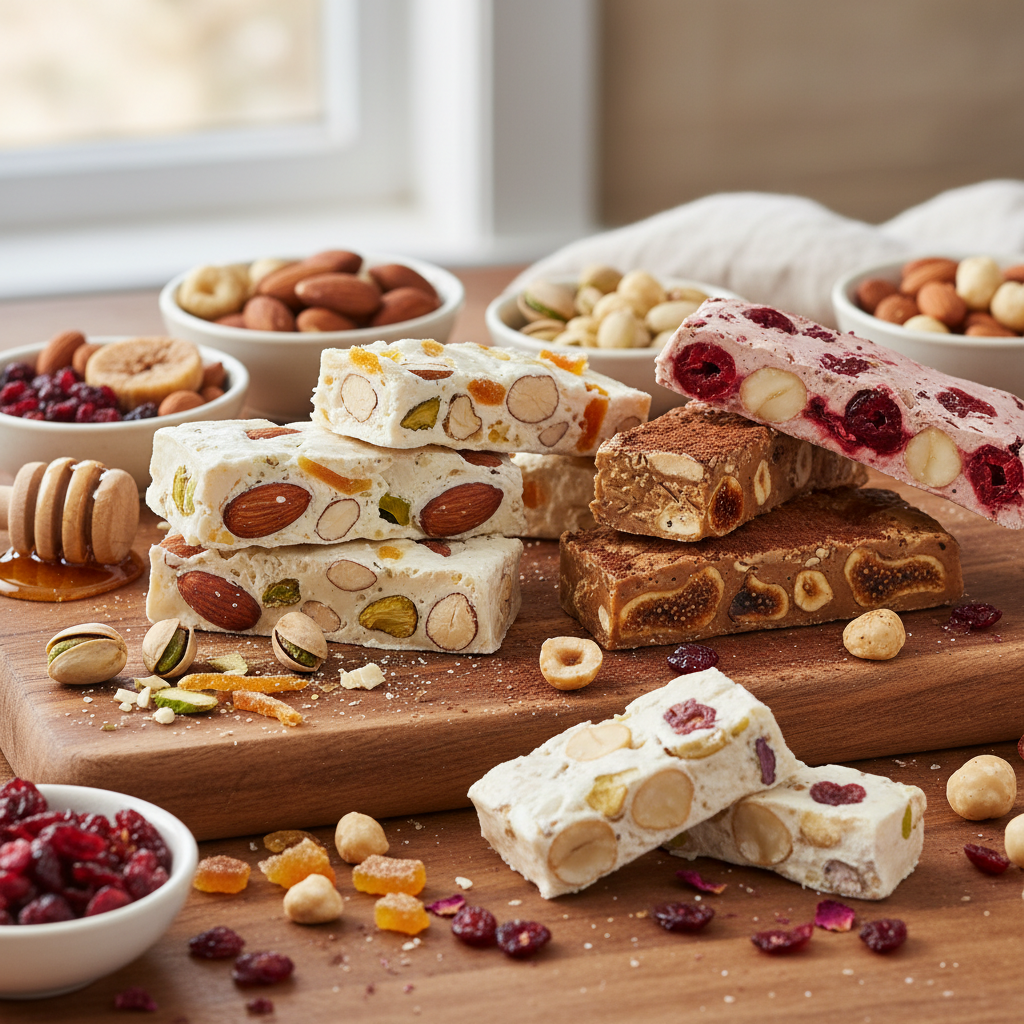
- Nutty Variations Experiment with different nut combinations like hazelnuts, walnuts, or pecans. Toasting them always enhances their flavor.
- Fruity Additions Fold in dried cranberries, chopped dried apricots, candied orange peel, or glace cherries for extra flavor and texture. Add them with the nuts.
- Chocolate Swirl Gently swirl in a tablespoon or two of melted dark chocolate at the very end before pressing into the pan for a marbled effect.
- Flavor Boosters A pinch of sea salt can enhance the sweetness. A touch of rosewater or orange blossom water can add a delicate floral note, especially good with pistachios.
Pro Chef Tips
- Mise en Place is Key Have all your ingredients measured and equipment ready before you start. Nougat making requires quick work, especially when the syrup is ready.
- Temperature Accuracy Invest in a reliable candy thermometer. The precise temperature of the syrup is crucial for the nougat’s final texture.
- Don’t Rush the Beating Beating the egg white and syrup mixture for the full 10-15 minutes is vital. This process cools the mixture and develops the stable, chewy texture.
- Humidity Matters High humidity can make nougat sticky. Try to make it on a dry day if possible.
- Sharp, Oiled Knife For clean cuts, use a very sharp knife or pizza cutter and lightly oil it between cuts.
Common Mistakes to Avoid
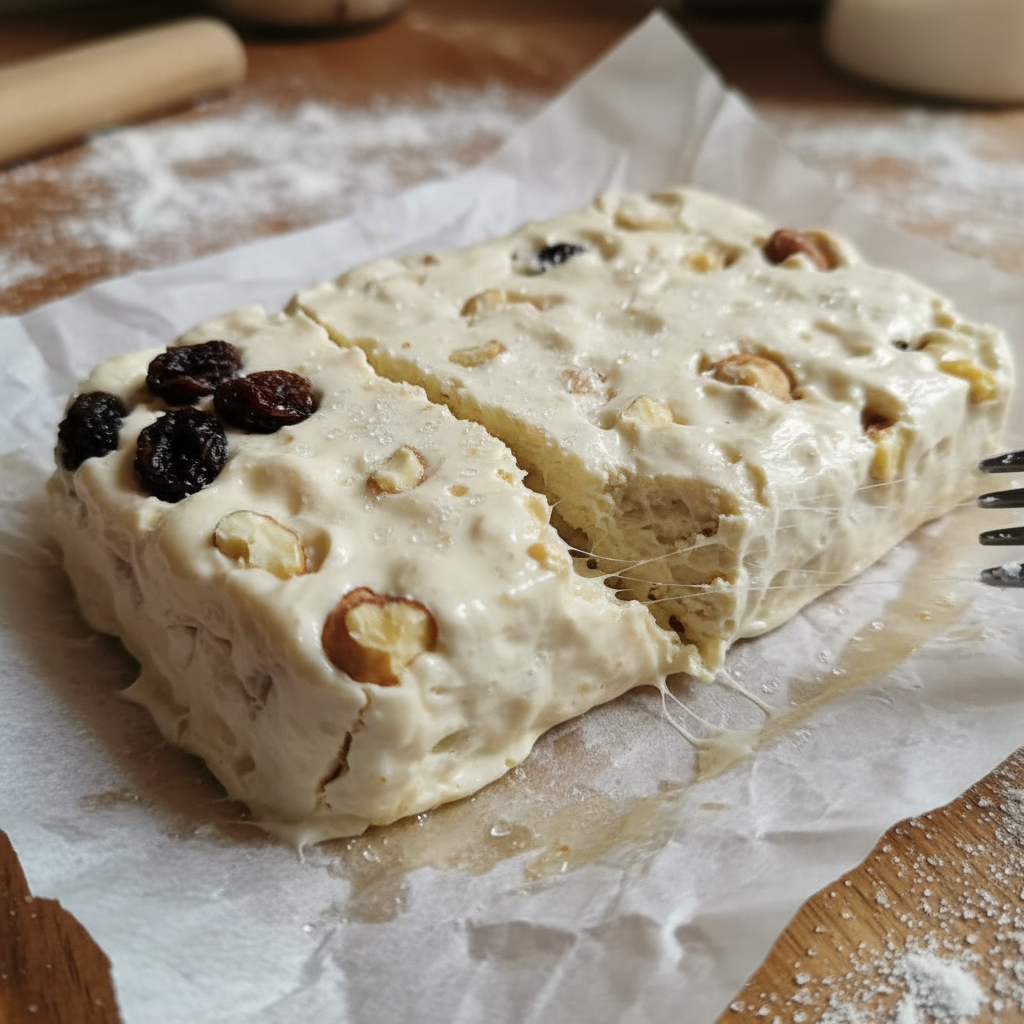
- Not Reaching Correct Syrup Temperature If the syrup doesn’t reach 290°F (143°C), your nougat will be too soft and sticky. If it goes too high, it will be hard.
- Pouring Syrup Too Fast Pouring the hot syrup too quickly into the egg whites can scramble them or create lumps. Pour slowly and steadily down the side of the bowl.
- Under-Beating the Meringue If the meringue isn’t beaten long enough after adding the syrup, the nougat won’t set properly and will remain too soft.
- Not Oiling Your Tools Nougat is incredibly sticky! Greasing your spatula, knife, and hands will save you a lot of frustration.
- Cutting Too Soon Don’t try to cut the nougat before it has fully set. Patience is a virtue here for clean, manageable pieces.
Storage and Meal Prep
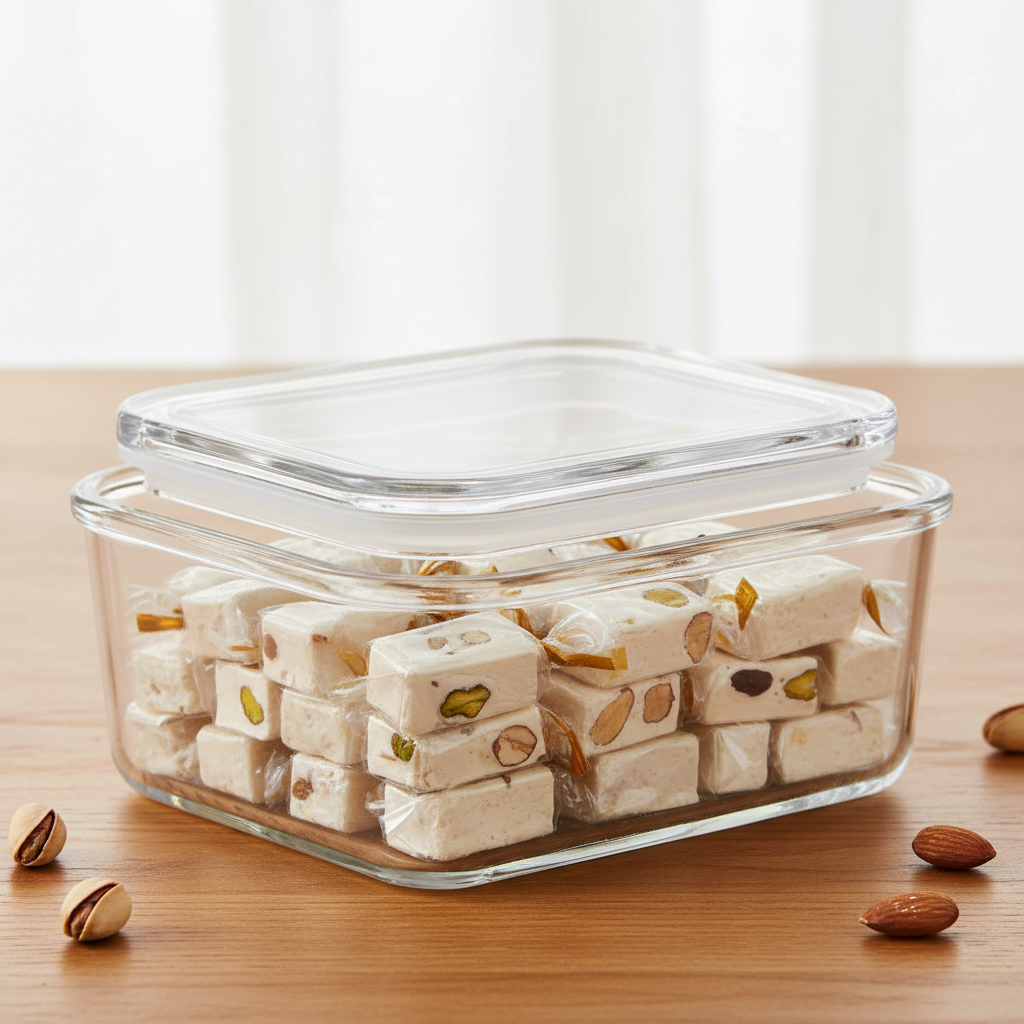
Once your nougat is cut, it’s essential to store it correctly to maintain its perfect texture. Wrap individual pieces tightly in wax paper, parchment paper, or clear cellophane. Then, store them in an airtight container at room temperature for up to 2-3 weeks. Keep it away from direct sunlight or heat sources. For meal prep, consider cutting the entire batch and wrapping them individually so they’re ready to grab and enjoy whenever a craving strikes.
Make-Ahead and Freezer Notes
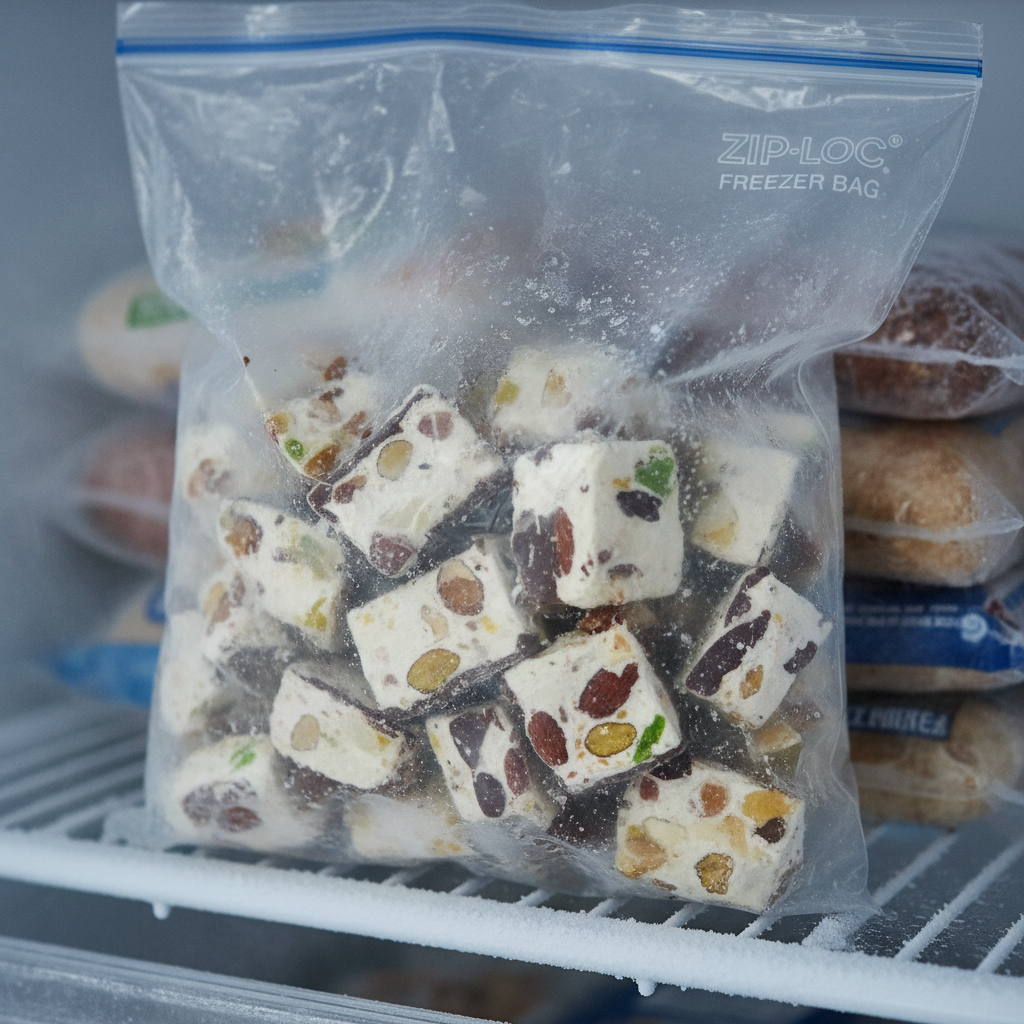
Nougat is an excellent make-ahead confection. You can prepare it several days or even a week in advance of when you plan to serve it. Just follow the storage instructions above. For longer storage, nougat can be frozen. Wrap individual pieces tightly in plastic wrap, then place them in a freezer-safe airtight container or bag. It can be frozen for up to 2-3 months. Thaw at room temperature for a few hours before serving. The texture might be slightly firmer after freezing, but it will still be delicious.
Serving Suggestions
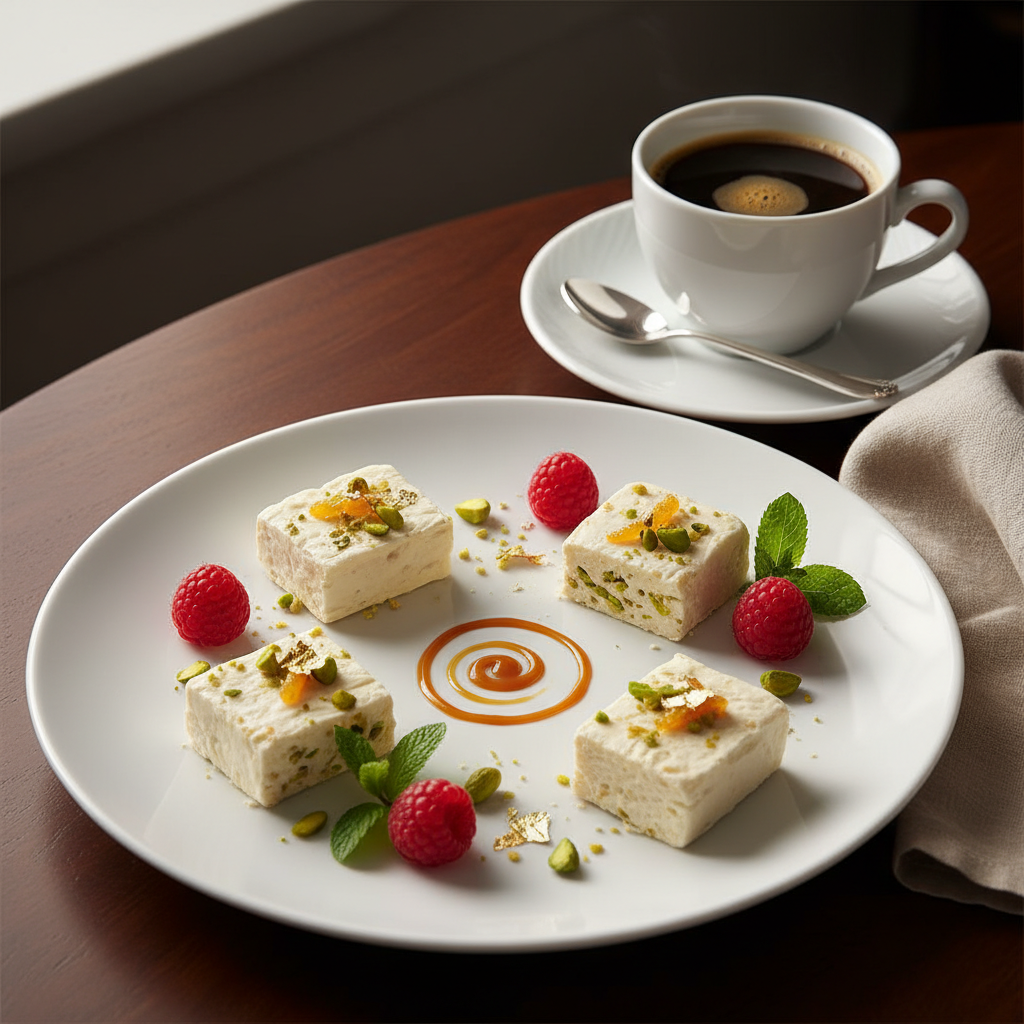
Homemade nougat is a versatile treat! Enjoy it on its own as a delightful snack or after-dinner indulgence. It pairs wonderfully with a cup of coffee or a glass of dessert wine. For a festive touch, include it on a holiday dessert platter alongside cookies, chocolates, and other homemade confections. You can also chop it into smaller pieces and use it as a topping for ice cream, yogurt, or even as a mix-in for homemade granola.