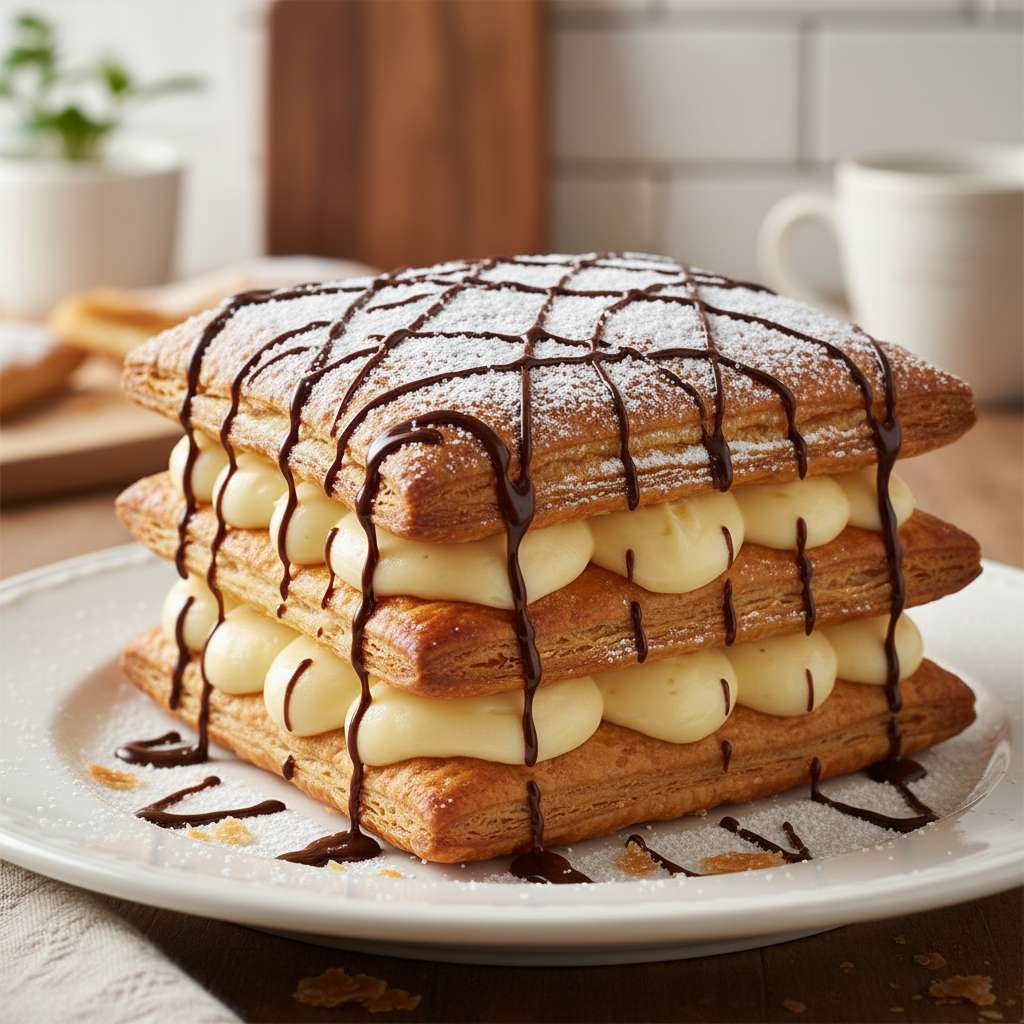
Welcome, fellow dessert lovers! Today, we’re diving into the enchanting world of Napoleon pastry, also famously known as Mille-Feuille, which translates to ‘thousand leaves.’ Don’t let the fancy name intimidate you! While it looks incredibly impressive, crafting this classic French dessert at home is more achievable than you might think. Imagine biting into crisp, buttery puff pastry, followed by a wave of smooth, sweet vanilla cream. It’s pure bliss, and I’m here to guide you every step of the way to create a show-stopping dessert that will wow your friends and family.
History and Background
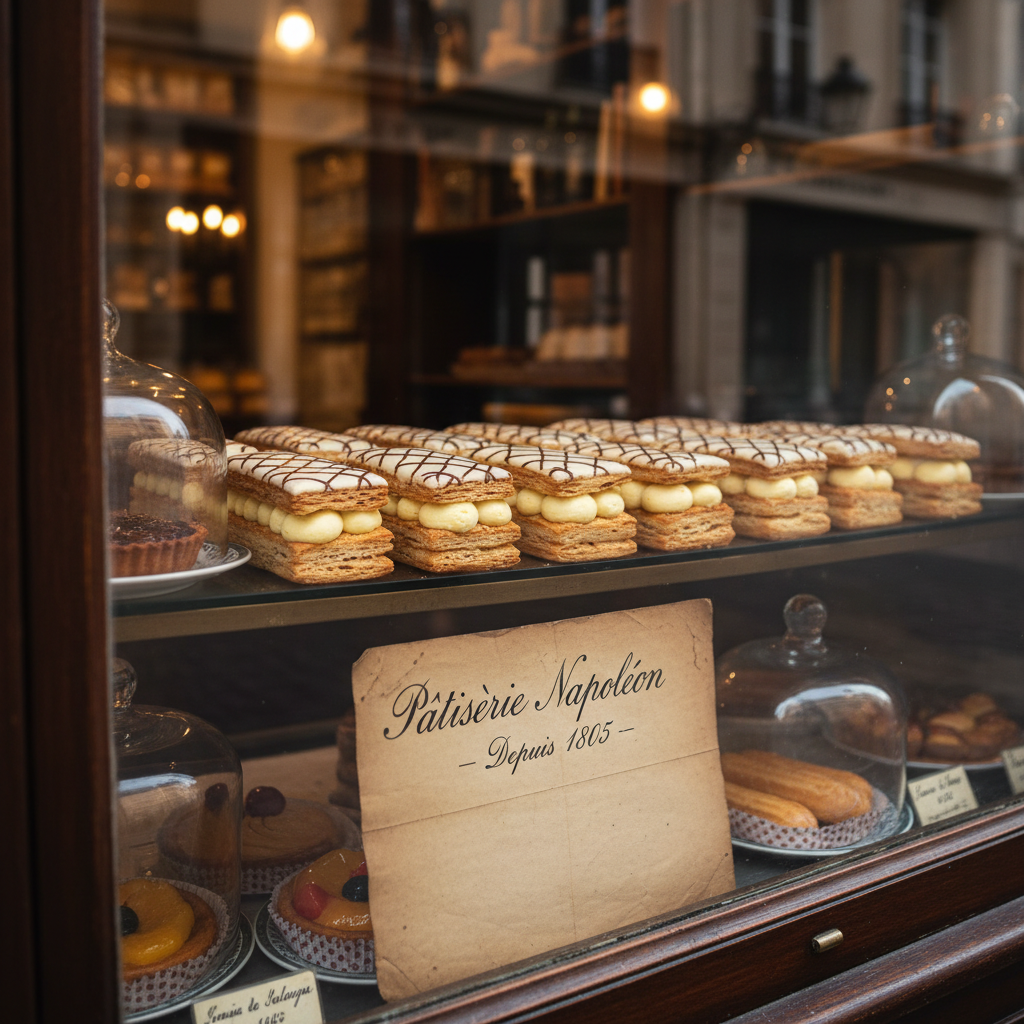
The Napoleon pastry has a rich and somewhat debated history, though its elegance is undeniable. While often associated with France, similar layered desserts have existed across Europe for centuries. The ‘Mille-Feuille’ as we know it today, with its distinct layers of puff pastry and cream, gained popularity in the 17th and 18th centuries. The name ‘Napoleon’ itself is a bit of a mystery; some believe it’s a corruption of the French word ‘Napolitain,’ referring to Naples, Italy, rather than the emperor Napoleon Bonaparte. Regardless of its exact origins, this pastry has cemented its place as a timeless classic, celebrated for its delicate texture and luxurious flavor. It’s a testament to the beauty of simple ingredients coming together to create something truly extraordinary.
Why You’ll Love This Recipe

- Impressive Results With a little patience, you’ll create a dessert that looks like it came from a high-end bakery.
- Delicious Flavor Combination The contrast of crisp pastry and creamy custard is utterly irresistible.
- Customizable Easily adapt the flavors with different extracts or fruit additions.
- Rewarding Process There’s a true sense of accomplishment in crafting this beautiful dessert from scratch.
- Perfect for Special Occasions It’s an ideal treat for celebrations, holidays, or simply elevating an ordinary day.
Ingredient Notes
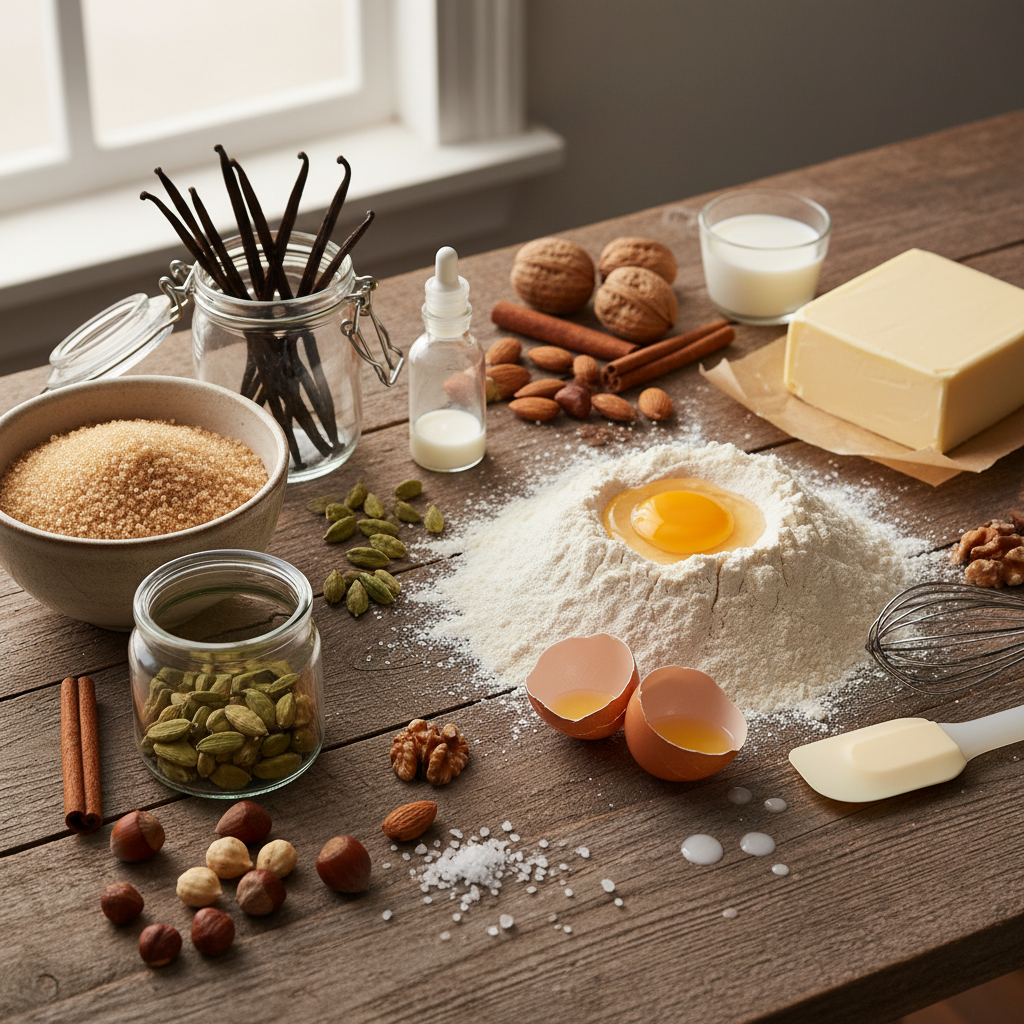
Gathering your ingredients is the first step to success. For this Napoleon, we’ll focus on quality and simplicity.
- Puff Pastry Store-bought frozen puff pastry is your best friend here. Look for all-butter varieties for the best flavor. Thaw it according to package directions in the refrigerator.
- Whole Milk Essential for a rich, creamy custard. Don’t skimp on the fat content here.
- Granulated Sugar Sweetens the custard to perfection.
- Egg Yolks These are crucial for richness, color, and thickening the custard. Save the whites for another recipe!
- Cornstarch Our thickening agent that ensures a smooth, stable custard.
- Vanilla Extract Use a good quality pure vanilla extract for the best flavor. Vanilla bean paste or a scraped vanilla bean can also be used for an even more intense vanilla aroma.
- Unsalted Butter A small amount is added to the finished custard for extra silkiness and flavor.
- Powdered Sugar For dusting the finished pastry, giving it that classic elegant look.
Equipment Needed
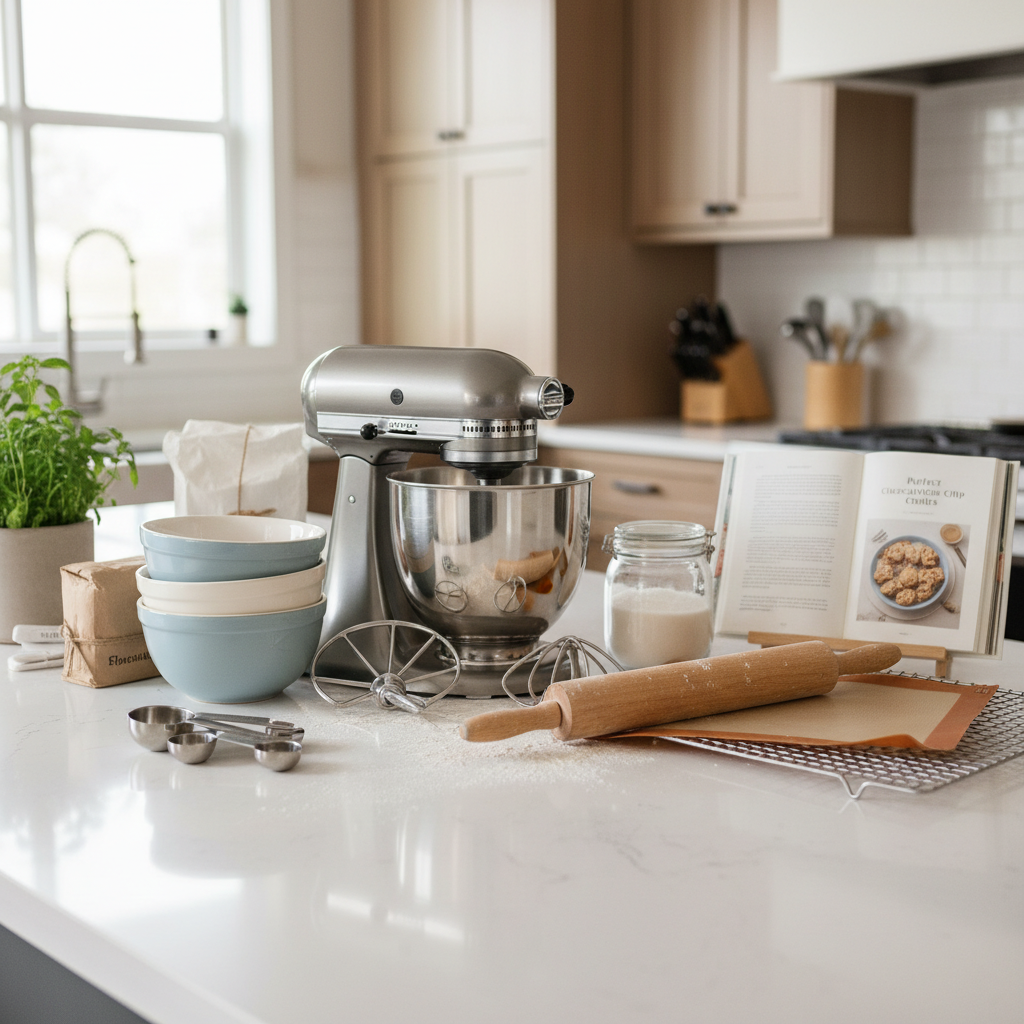
Having the right tools makes all the difference for a smooth baking experience.
- Baking Sheets You’ll need at least two, preferably heavy-duty ones.
- Parchment Paper Prevents sticking and helps with even baking.
- Rolling Pin For gently rolling out the puff pastry.
- Sharp Knife or Pizza Cutter For precise pastry cuts.
- Fork For pricking the pastry to prevent excessive puffing.
- Medium Saucepan For cooking the custard.
- Whisk Essential for a lump-free custard.
- Fine-Mesh Sieve For straining the custard, ensuring ultimate smoothness.
- Mixing Bowls A few medium-sized ones for prep.
- Plastic Wrap To cover the custard while it cools.
- Offset Spatula or Butter Knife For spreading the custard evenly.
- Ruler For accurate pastry measurements.
Full Recipe Card
Ingredients
- 1 (14.1-ounce) package frozen puff pastry, thawed
- 2 cups whole milk
- 1/2 cup granulated sugar, divided
- 4 large egg yolks
- 1/4 cup cornstarch
- 1 teaspoon pure vanilla extract
- 2 tablespoons unsalted butter, softened
- 1/4 cup powdered sugar, for dusting
Instructions
- Prepare the Puff Pastry Preheat your oven to 400°F (200°C). Line two baking sheets with parchment paper. On a lightly floured surface, gently unfold one sheet of thawed puff pastry. Roll it out slightly to about a 10×12 inch rectangle. Trim the edges to create neat rectangles. Repeat with the second sheet.
- Bake the Pastry Using a fork, prick the pastry all over. This helps prevent it from puffing up too much. Place the pastry sheets on the prepared baking sheets. Bake for 15-20 minutes, or until golden brown and crisp. If they puff up too much, gently press them down with another baking sheet during the last 5 minutes. Let cool completely on a wire rack.
- Make the Pastry Cream In a medium saucepan, heat 1.5 cups of the whole milk over medium heat until simmering. In a separate medium bowl, whisk together the remaining 1/2 cup milk, 1/4 cup granulated sugar, egg yolks, and cornstarch until smooth.
- Temper the Egg Yolks Slowly pour about half of the hot milk into the egg yolk mixture, whisking constantly to temper the yolks. Pour the tempered mixture back into the saucepan with the remaining hot milk.
- Cook the Custard Cook over medium heat, whisking constantly, until the mixture thickens significantly and comes to a boil. Boil for 1 minute, whisking. Remove from heat and stir in the remaining 1/4 cup granulated sugar, vanilla extract, and softened butter until smooth.
- Cool the Custard Pour the pastry cream through a fine-mesh sieve into a clean bowl to remove any lumps. Cover the surface directly with plastic wrap to prevent a skin from forming. Chill in the refrigerator for at least 2 hours, or until completely cold and firm.
- Assemble the Napoleon Once the pastry and cream are thoroughly chilled, carefully trim the pastry sheets into three equal rectangles (approximately 4×10 inches each, or your desired size). Place one pastry rectangle on a serving platter. Spread half of the chilled pastry cream evenly over the top.
- Layer and Finish Top with the second pastry rectangle, then spread the remaining pastry cream. Place the third pastry rectangle on top. Gently press down. Dust generously with powdered sugar just before serving.
Notes
- For perfectly flat pastry, bake between two sheets of parchment paper with a baking sheet on top.
- Ensure pastry cream is completely cool before assembling to prevent melting the pastry.
- Use a serrated knife to cut the assembled Napoleon for cleaner slices.
Tips and Variations

While the classic Napoleon is wonderful, feel free to get creative!
- Chocolate Drizzle Melt some dark chocolate and drizzle it over the top layer for extra decadence.
- Fresh Berries Garnish with fresh raspberries or sliced strawberries for a burst of color and tartness.
- Citrus Zest Add a teaspoon of lemon or orange zest to the pastry cream for a brighter flavor.
- Coffee Cream Infuse the milk with coffee beans or add a tablespoon of instant espresso powder to the custard for a mocha variation.
- Nutty Crunch Sprinkle finely chopped toasted nuts (like almonds or pistachios) between the layers for added texture.
Pro Chef Tips
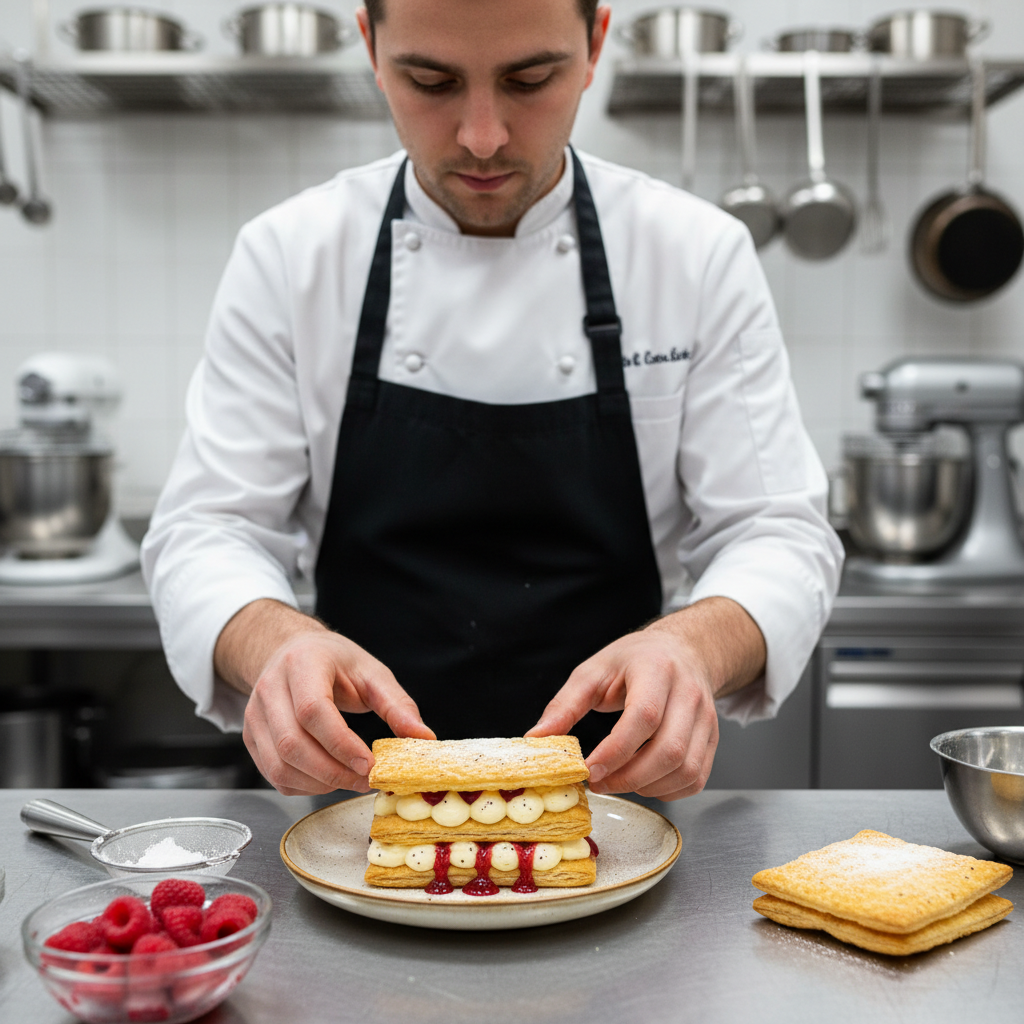
Elevate your Napoleon game with these expert insights:
- Even Baking is Key For uniform flakiness, ensure your puff pastry is pricked thoroughly and baked until evenly golden. Over-baking slightly is better than under-baking, as it contributes to crispness.
- Chill Everything A cold pastry cream and chilled pastry layers are essential for a clean assembly and a stable dessert. Don’t rush the chilling steps!
- Sharp Knife for Clean Cuts When cutting the baked pastry into even rectangles, use a very sharp, long serrated knife with a sawing motion to avoid crushing the delicate layers.
- Dust Just Before Serving Powdered sugar tends to absorb moisture quickly. For the prettiest presentation, dust your Napoleon right before you’re ready to serve.
- Portioning Consider cutting the baked puff pastry into individual serving sizes *before* assembling. This makes serving much easier and less messy.
Common Mistakes to Avoid
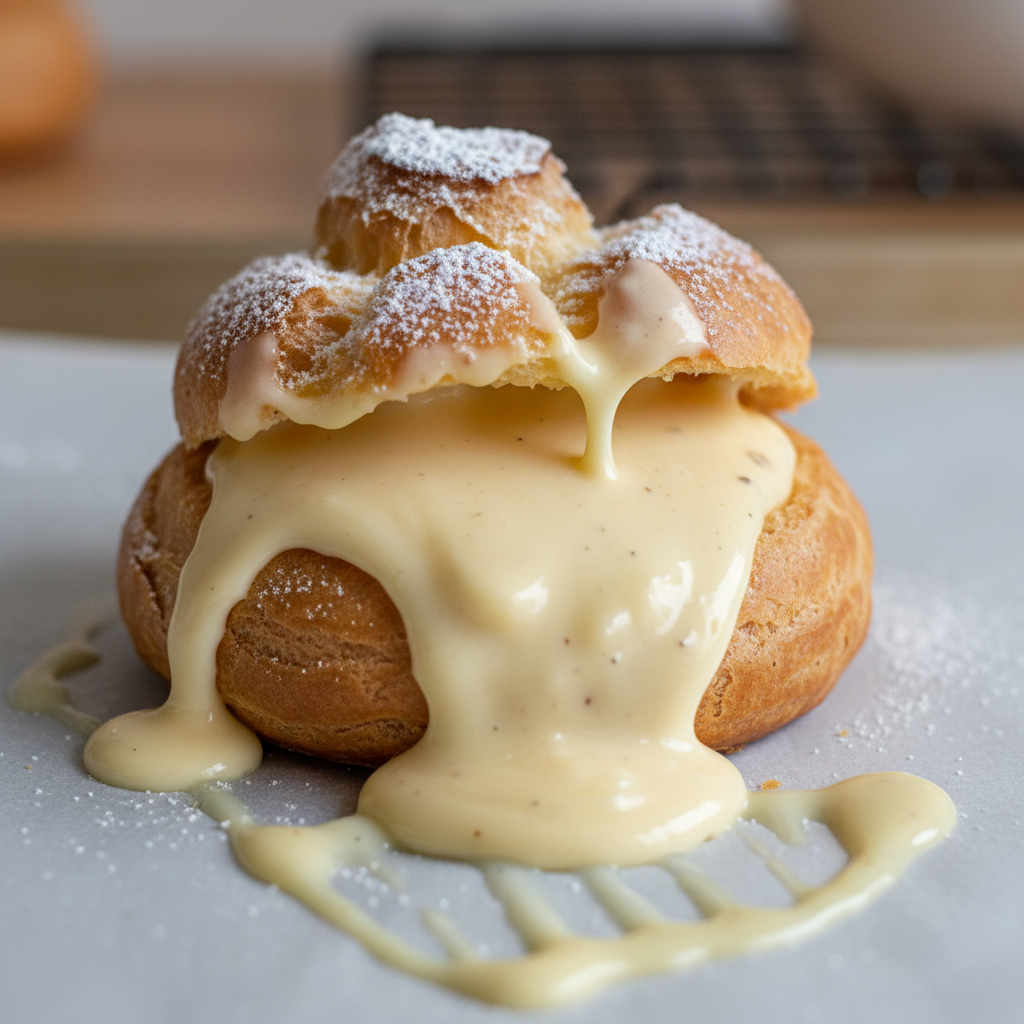
Even seasoned bakers make mistakes. Here’s what to watch out for:
- Not Pricking the Pastry If you don’t prick the pastry, it will puff up unevenly and become difficult to layer.
- Under-baking the Pastry This leads to soggy, chewy layers instead of crisp, flaky ones. Bake until deeply golden.
- Lumpy Pastry Cream Not whisking constantly while cooking the custard, or not straining it, can result in lumps. Whisk diligently!
- Warm Pastry Cream Assembling with warm custard will cause it to melt the pastry, leading to a messy, unstable dessert. Patience is a virtue here.
- Cutting Too Soon Trying to cut the assembled Napoleon without a proper serrated knife or before it has a chance to set can result in squished layers.
Storage and Meal Prep
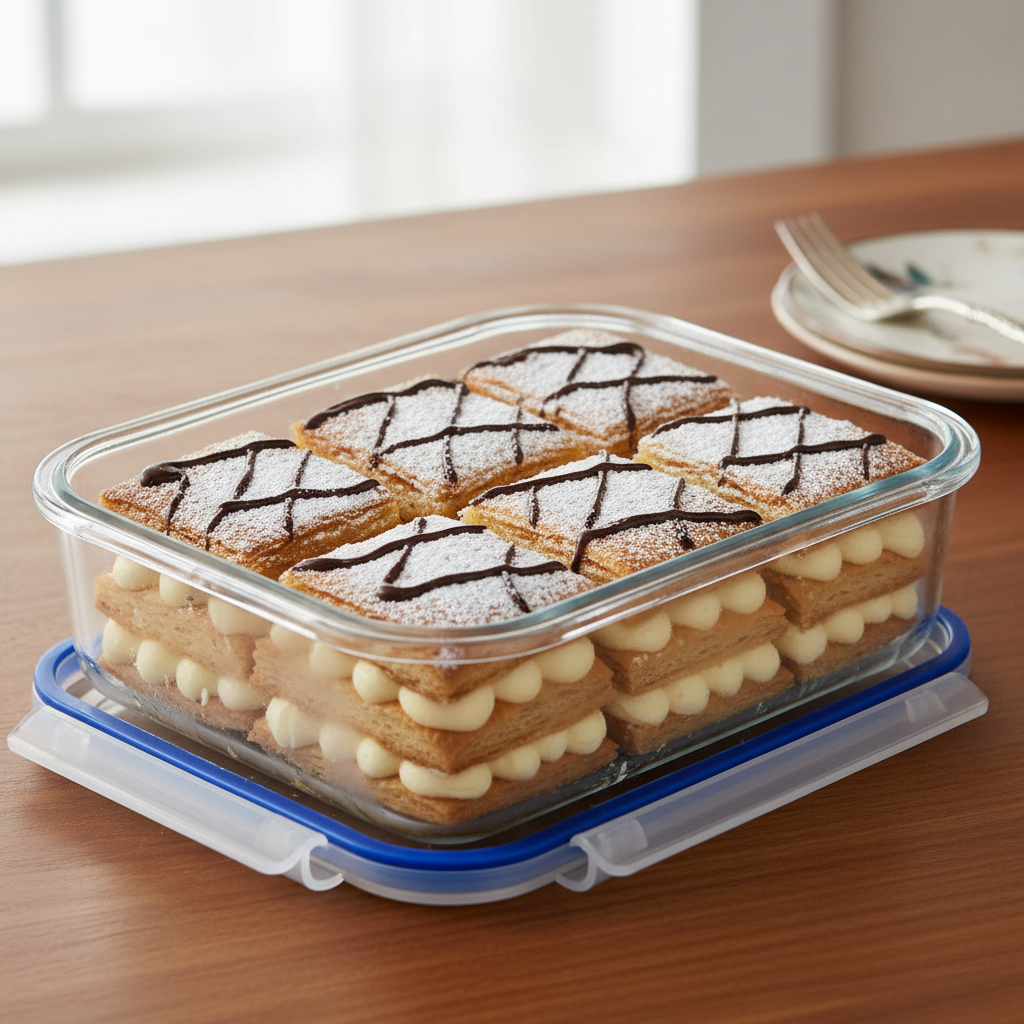
Napoleon pastry is best enjoyed fresh, but you can certainly prepare components ahead of time.
- Assembled Pastry Once assembled, Napoleon pastry is best served within a few hours. The pastry will start to soften as it absorbs moisture from the cream. Store loosely covered in the refrigerator for up to 1 day.
- Pastry Cream The pastry cream can be made up to 2-3 days in advance. Store it in an airtight container with plastic wrap directly on the surface in the refrigerator. Whisk it briefly before using to restore its smooth consistency.
- Baked Pastry Sheets The baked puff pastry sheets can be stored in an airtight container at room temperature for up to 2 days, or frozen for up to 2 weeks. Re-crisp in a 350°F (175°C) oven for a few minutes if needed before assembling.
Make-Ahead and Freezer Notes
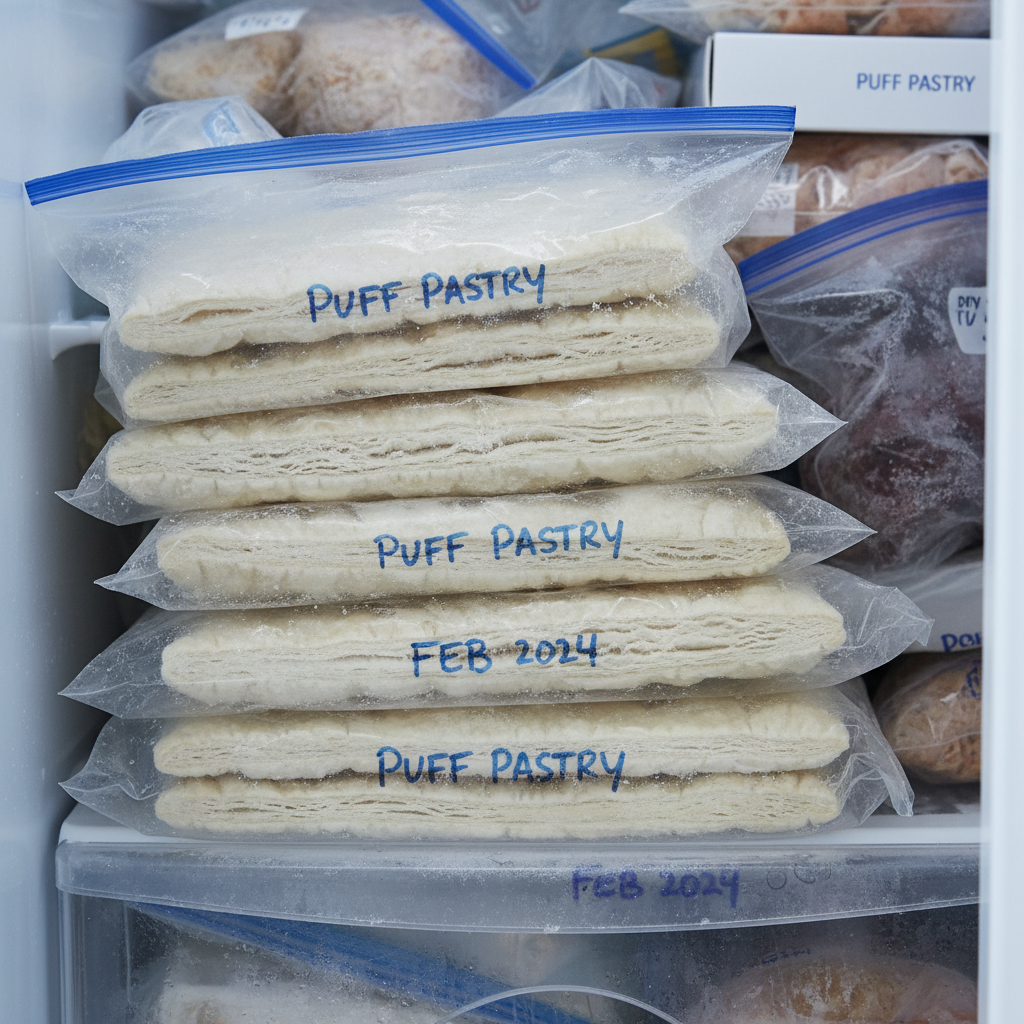
This dessert is perfect for partial make-ahead prep, especially for entertaining.
- Puff Pastry Bake the puff pastry sheets completely, let them cool, and store them in an airtight container at room temperature for up to 2 days. For longer storage, freeze them for up to 2 weeks. Thaw at room temperature and re-crisp in the oven if desired before assembling.
- Pastry Cream Prepare the pastry cream entirely, cool it, and store it in the refrigerator for up to 3 days. Ensure it’s well-covered to prevent a skin from forming.
- Assembly Assemble the Napoleon no more than a few hours before serving for optimal texture. Freezing the assembled pastry is not recommended, as the pastry will become soggy upon thawing.
Serving Suggestions
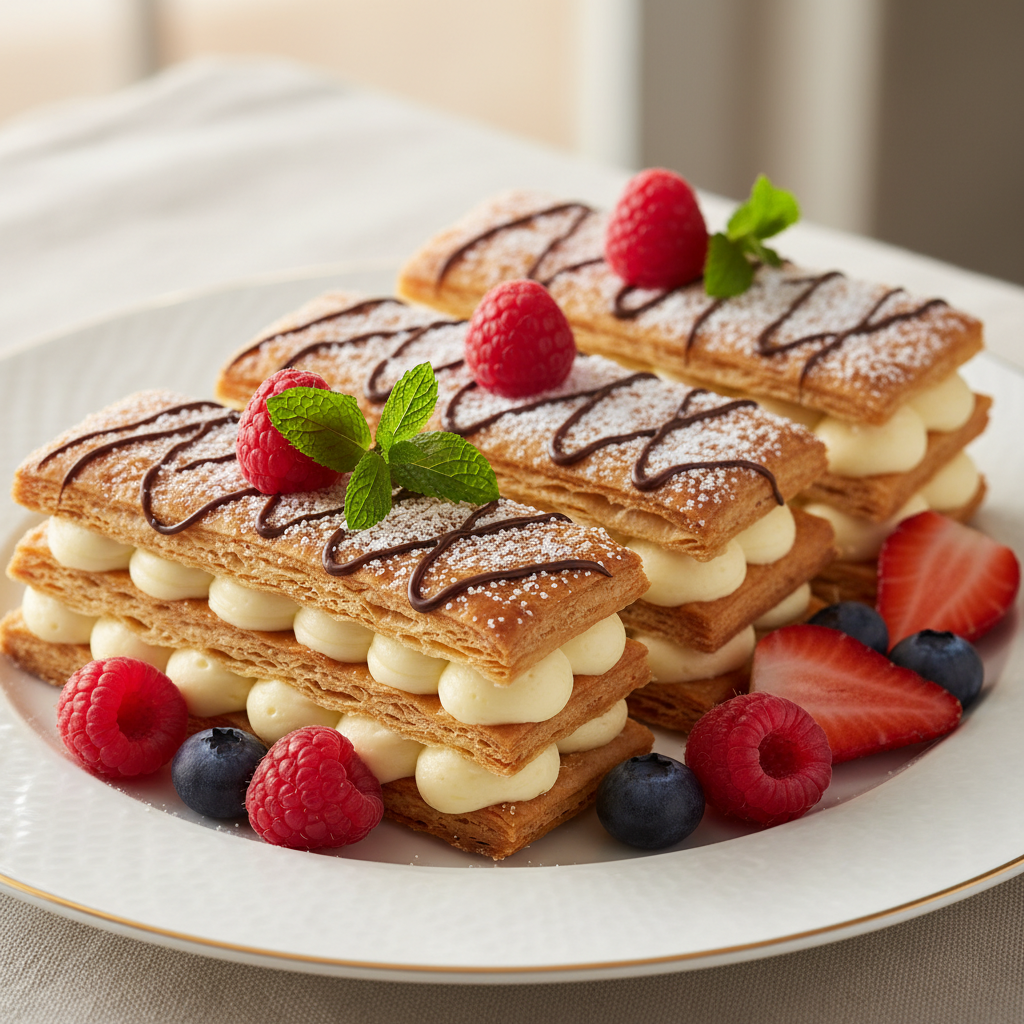
A beautifully made Napoleon deserves an equally beautiful presentation!
- Classic Dusting A simple dusting of powdered sugar is elegant and traditional.
- Fruit Garnish Fresh berries, like raspberries, strawberries, or blueberries, add a lovely pop of color and freshness.
- Chocolate Accents A drizzle of melted dark chocolate or a sprinkle of chocolate shavings can elevate the presentation.
- Coffee or Tea Serve alongside a cup of freshly brewed coffee, espresso, or your favorite tea for a delightful afternoon treat.
- Individual Portions For easier serving, you can assemble smaller, individual Napoleons, or cut the large one into neat squares or rectangles.